When investing in high-end ski goggles, you’re often bombarded with terms like “Polarized,” “Photochromic,” and “Color Enhancement.”
These technologies can drive price differences of hundreds of dollars, but is more expensive always better?
In fact, choosing the wrong tech can be a safety risk. This guide breaks down the physics of lens technologies to help you decide.
Polarized Lenses: The Double-Edged Sword of Glare Reduction
The Optical Principle of Polarization
Polarized lenses feature a vertical molecular filter that blocks horizontal light reflections, also known as glare.
On bright days, snow acts like a giant mirror. Polarized lenses effectively eliminate snow glare, significantly reducing eye fatigue.
Why Professional Racers Sometimes “Reject” Polarization?
While polarization kills glare, it also has a critical side effect: it hides the reflective signature of ice patches.
For high-speed skiers, ice is dangerous. Polarized lenses can make it harder to spot these shiny patches, increasing the risk of a washout.
Photochromic Technology: The All-Weather “Chameleon”
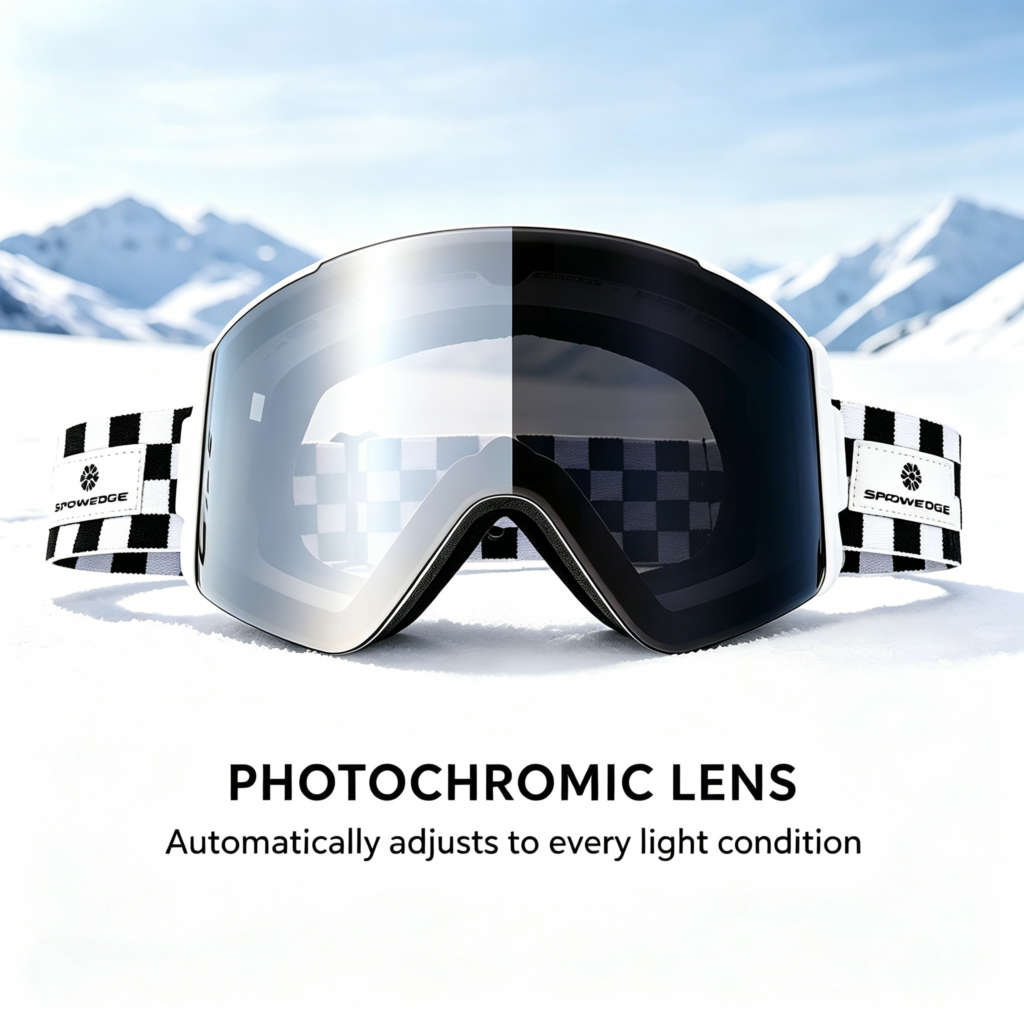
Automatic Adjustment via UV Intensity
Photochromic lenses contain molecules sensitive to UV light, changing the lens tint automatically as light levels shift.
- This means you no longer need to swap lenses between a foggy morning and a bright afternoon.
- It provides visual continuity throughout the day without any manual effort.
Temperature Dependency: The Achilles’ Heel
Many skiers don’t realize that photochromic reaction speed is highly dependent on temperature.
- In extreme cold (below -20°C), the chemical reaction slows down.
- If you ski in ultra-cold regions, the lens may not transition between light and dark as quickly as it does in milder weather.
High-Contrast & Color Enhancement: A New Era of Vision
Filtering Specific “Visual Noise”
Unlike simple tinting, high-contrast tech (like REVO coatings and their successors) works by filtering out specific wavelengths of light.
- It removes “messy” intermediate colors while boosting the blues and reds that define snow texture.
- This allows skiers to see bumps, ridges, and transitions with far greater clarity.
The Leap in Depth Perception
The core value of this tech is enhancing “Depth Perception.”
- Even on “flat light” days, high-quality contrast lenses allow you to see the shadows in the snowpack.
- This is currently the most practical and valued technology trend in the professional ski community.
Deep Selection Guide: Which Type of Skier Are You?
The Recreational Vacationer: Priority on Convenience
If you ski 1-2 times a year and don’t want to carry multiple lenses, Photochromic lenses are your best bet.
- They adapt to most non-extreme conditions, saving you the hassle of lens swapping mid-day.
The Tech Enthusiast & Pro: Priority on Precision
If you demand the absolute sharpest vision and are willing to invest in it,
- High-Contrast Color Enhancement lenses paired with a magnetic swap system are the ultimate combo.
- Swapping to a specific VLT lens for the current weather always provides more precise feedback than an automatic lens.
High-Altitude & Sunny Regions: The Need for Polarization
1.Priority on Light Protection
In regions with intense sun like the Alps or the Rockies, the protection of polarized lenses is irreplaceable.
2.The Trade-off Between Ice and Comfort
If you ski at moderate speeds in these areas, the comfort gain from polarization usually outweighs the loss of ice-patch detection.
Maintenance and Longevity: A Buyer’s Warning
Degradation of Coatings
Whether it’s the polarized layer or the anti-fog coating, all lens technologies have a chemical shelf life.
- Generally, top-tier optical performance lasts for 3-5 ski seasons.
- Exposure to high humidity or extreme heat inside a car will accelerate oxidation and peeling.
Detecting the Low-Price Trap
Many cheap goggles claim to be “Polarized” but are just simple dark-tinted lenses.
- These lack actual polarized filters and can even be dangerous by causing pupils to dilate while letting in harmful UV.
- Pro Tip: Always check for verified UV400 certification and official optical test reports.
Conclusion: No Single Best Tech, Only the Right Scenario
Understanding the difference between Polarized, Photochromic, and High-Contrast gives you the power to build a professional kit.
Choosing a lens that matches your skiing style is the first step to conquering the mountain.
Hubo Sports focuses on bringing lab-grade optical tech to the slopes, offering you more possibilities.