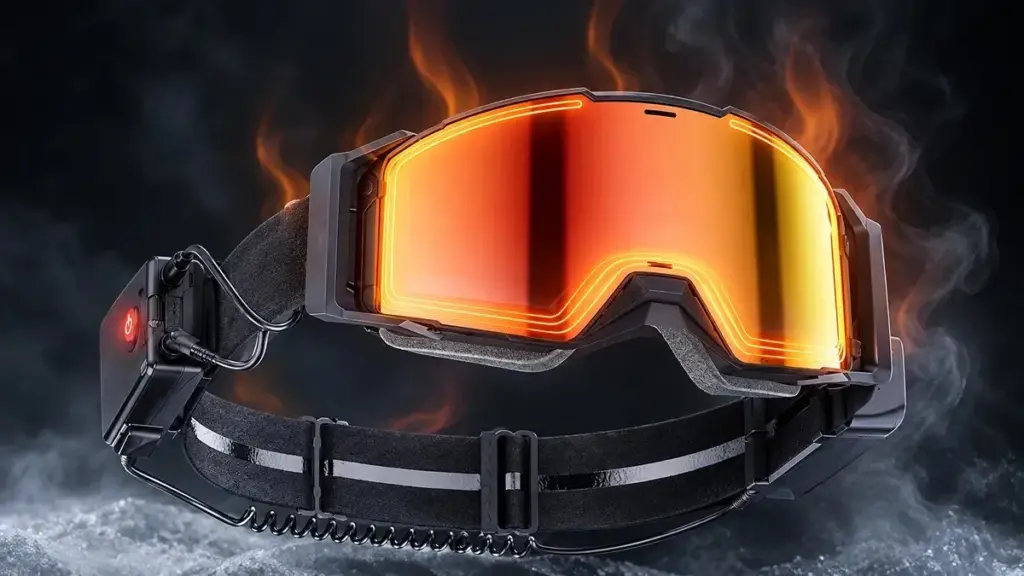
Heated anti-fog ski goggles use electrical energy to warm the lens and help limit condensation, providing clearer vision and proven heated anti-fog ski goggle benefits on the mountain. Coatings manage moisture on the surface, while ventilation lets humid air escape. These functions work together; heating does not make fit or airflow irrelevant.
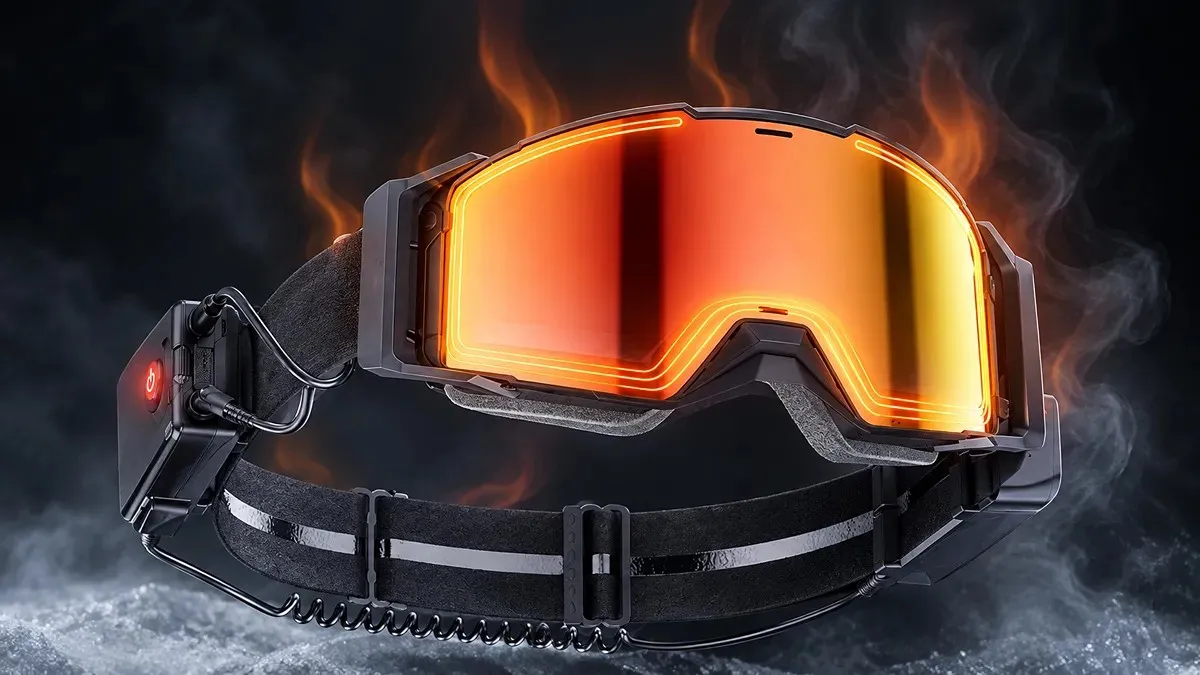
Hubo’s HB60 adds a model-specific example to this explanation. Its manual describes temperature and humidity sensing, automatic PWM heating control, and an independently replaceable outer magnetic lens. The focus is on when heating operates and which parts can be replaced, rather than a blanket promise of fog-free skiing.
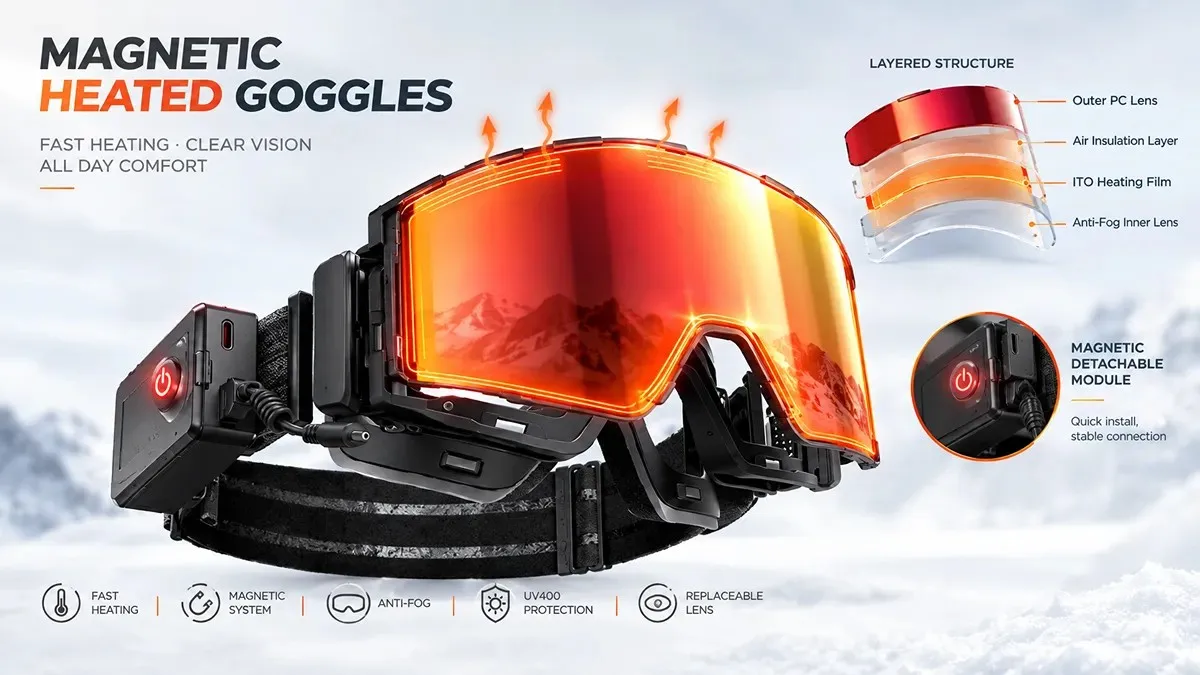
How ITO heating helps control condensation
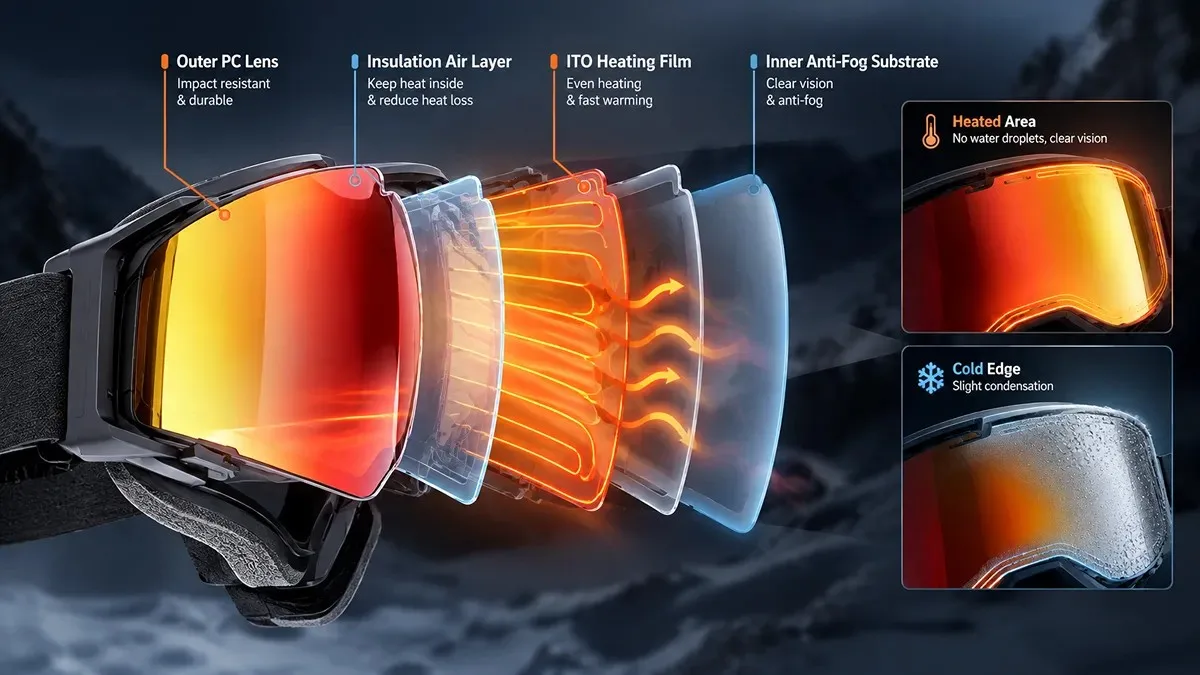
Fog forms when warm, humid air inside a goggle meets a sufficiently cold lens. Moisture condenses into droplets that scatter light. Heavy exertion, breath directed upward by a face covering, and blocked vents can contribute to the problem.
ITO, or indium tin oxide, is a conductive material used in transparent heating films. Passing current through the conductive layer produces heat. Warming the lens helps reduce the conditions that allow condensation to form.
Hubo’s general heated-series documentation describes ITO technology. The HB60 manual, however, identifies an inner electric heating lens without naming its conductive material. The ITO explanation here covers the broader technology, not a confirmed HB60 material specification. Buyers should request the model-specific layer construction before making that claim.
Why coatings and ventilation still matter
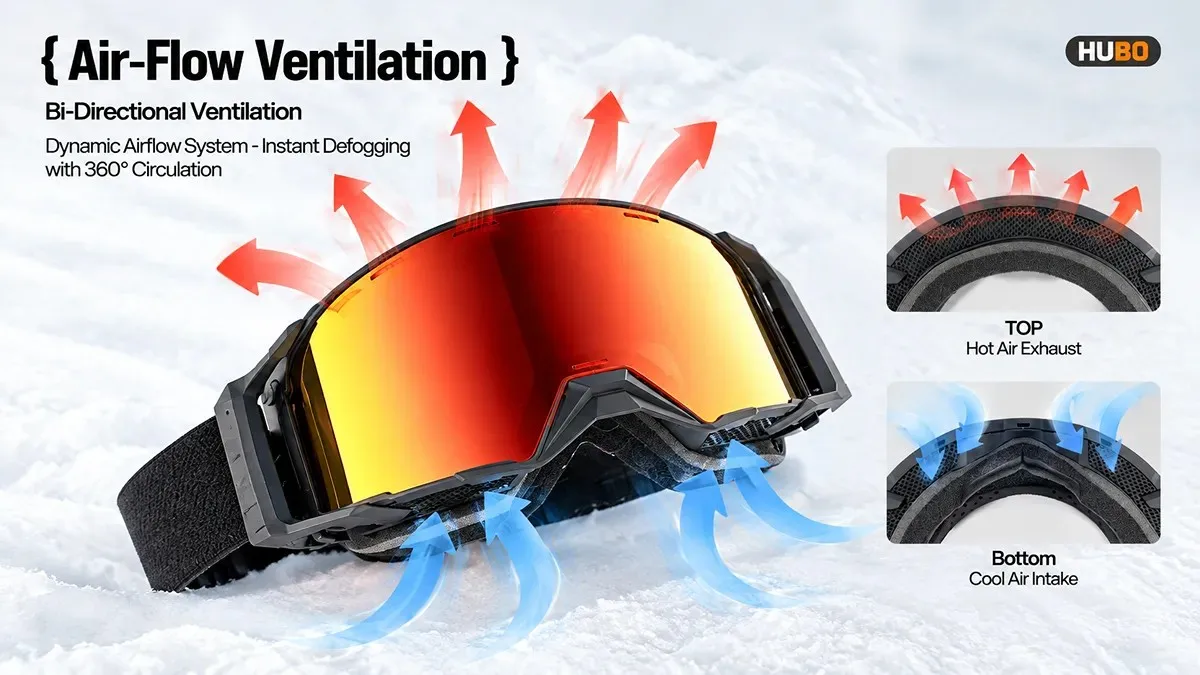
Passive anti-fog approaches address different parts of the problem. A hydrophilic coating spreads moisture across the lens surface instead of allowing it to collect as light-scattering droplets, while a conventional double-lens design uses an insulating air gap to help keep the inner lens warmer (explore our in-depth guide to ski goggle anti-fog technology). Ventilation allows humid air to leave the goggle cavity.
These are general design principles, not confirmation that every construction appears in HB60. Its manual specifies separate outer and inner lenses but does not identify an anti-fog coating chemistry or certify a particular insulating seal design.
Keep vents unobstructed and check the goggle with the intended helmet and face covering. Heating cannot compensate for every source of trapped moisture if airflow is restricted—a principle highlighted in independent ski goggle fog prevention and ventilation guides. Avoid rubbing a wet inner lens or applying unapproved cleaners; follow the model’s care instructions.
What HB60 adds to the heated-goggle design
Temperature and humidity sensing with PWM control
HB60 monitors conditions inside the goggle cavity using temperature and humidity sensors and a controller. The manual describes PWM pulses that regulate the heating film’s operating time when preset conditions are reached.
This means power-on and active heating are different states. The unit enters automatic control mode after startup; the heater may remain inactive until the control conditions call for it. That distinction belongs in retailer training and customer support, not just the instruction leaflet.
The manual does not provide a controlled comparison against an earlier model. Sensor-based control should therefore be described as a documented function, without adding a percentage energy saving or a faster defogging claim.
Separate outer magnetic lens and inner heated lens
HB60 has a large cylindrical outer lens, an inner heated anti-fog lens, and a silicone seal. The outer coated lens can be detached independently through the magnetic attachment. The strap also releases through side buckle locks.
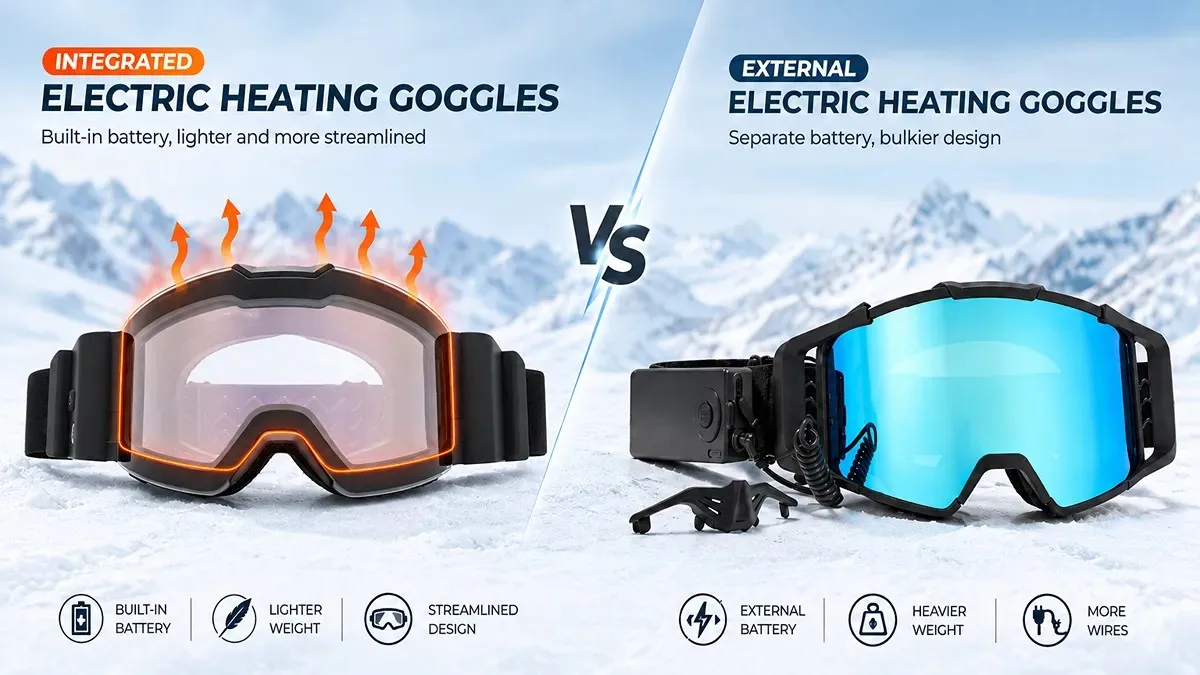
For a brand, this creates a practical replacement-parts discussion: confirm compatible outer lenses and straps before finalizing a retail package. The detachable outer lens does not mean the inner heating assembly or battery is user-replaceable.
Nor does a magnetic attachment establish compatibility with every lens tint or another model. Confirm the part number and intended light conditions for each replacement option.
Battery runtime, controls, and charging
The following details come from the HB60 manual, rather than the older general heated-series description.
| Item | HB60 manual specification |
| Battery | Built-in 18500, 3.7V, 2000mAh lithium battery |
| Runtime | Stated 5–12 hours from a full charge |
| Charging time | Approximately 2.5 hours |
| Power on | Short press; battery LEDs display for 5 seconds, then automatic mode |
| Power off | Hold the switch for 3 seconds |
| While charging | Sensors stop operating; electric heating is inactive |
Runtime is not a guaranteed minimum. The manual’s troubleshooting section acknowledges that cold conditions or frequent switching may reduce operation below five hours. Use the stated range with those qualifications, and request the test conditions for any retail runtime claim.
Charging uses the USB-C port. The manual describes compatibility with USB-A/USB-C charger connections and car USB power; this does not establish support for every fast-charging protocol.
Do not charge below 0°C. The manual instructs users to move the goggles into a warm environment and wait one hour before charging. Check that the environment meets the temperature requirement. Never interpret the operating temperature as the permitted charging temperature.
What brands should confirm before ordering
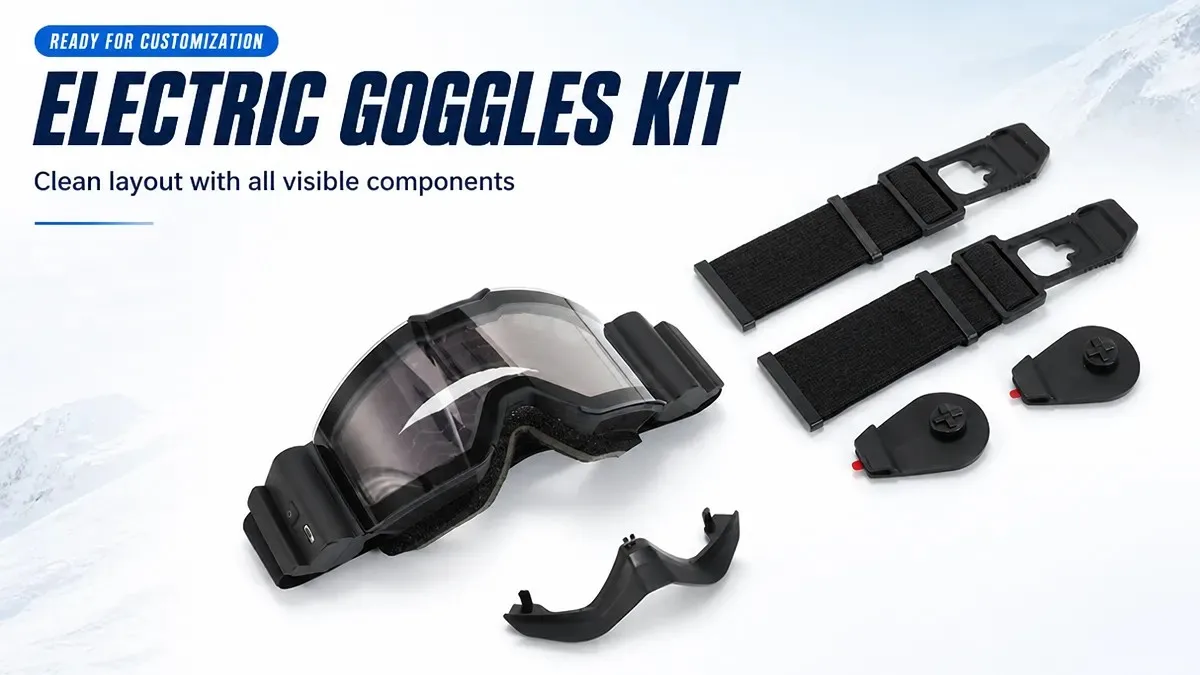
Ask Hubo for a finished HB60 sample, compatible replacement parts, and a model-specific specification sheet. Review sensor behavior, heating uniformity, fit, and lens replacement with the same accessories customers will use.
Keep the documentation matched to the production version. Confirm battery transport documents and compliance with industry standards such as the ASTM F659 standard specification for ski goggles rather than transferring certificates from a generic heated-goggle family. The manual alone does not establish product certification, a waterproof rating, or a verified extreme-cold operating limit.
The commercial brief should also state which lens, strap, packaging, and instruction options are included. Obtain a current quotation and production schedule for that configuration instead of carrying over general-series lead times.
FAQ
Does HB60 heat continuously after startup?
Not necessarily. It enters automatic mode and activates heating according to the sensor-based control conditions described in the manual.
Can the outer lens be replaced separately?
Yes. The manual describes independent removal of the outer magnetic lens. Use a compatible HB60 replacement and follow the removal instructions.
Is HB60 battery life guaranteed for 12 hours?
No. The manual states 5–12 hours and notes that cold conditions or frequent switching can shorten runtime, including below five hours.
Can I use the heating function while charging?
No. The manual states that the sensors stop operating and electric heating is inactive during charging.
Does HB60 remove the need for lens care?
No. Follow the manual’s cleaning guidance, avoid impacts and soaking, and store the goggles dry. Heating is not a replacement for maintenance.
Discuss an HB60 project
HB60 combines sensor-controlled heating with a separable outer lens and buckle-release strap. For a private-label range, evaluate those functions on the actual sample and confirm the documentation that supports each claim.
Contact Hubo Sports to review HB60 samples, replacement-lens compatibility, and model-specific development requirements.