Selecting an OEM/ODM manufacturing partner for ski goggles and sports sunglasses requires looking past glossy product catalogs. In performance sports optics, manufacturing precision directly dictates optical safety, coating adhesion, and defect rates in the field.
A sub-micron dust particle trapped between laminated lens sheets causes optical distortion. An improperly cured hydrophilic coating flakes after three ski sessions. A weak hinge snaps under helmet strap tension.
To protect your brand reputation, conducting a thorough on-site or third-party factory audit is essential. This guide outlines the core checkpoints for evaluating a sports eyewear factory—from dust-free workshop standards to destructive physical testing and international compliance verifications.
Core Sports Eyewear Factory Audit Pillars
- ISO Cleanrooms (Class 10k-100k)
- Anti-static ESD flooring
- Positive pressure & climate control
- Virgin optical polymer checks
- Vacuum REVO sputter coating QA
- 100% high-CRI final visual QA
- Drop-ball impact (ANSI Z87.1)
- Spectrometer & UV400 verification
- 48h salt spray corrosion chamber
Cleanroom standards and environmental controls
Optical manufacturing cannot take place in a standard open warehouse. Dust, static electricity, and unregulated humidity ruin lens coatings and optical clarity.
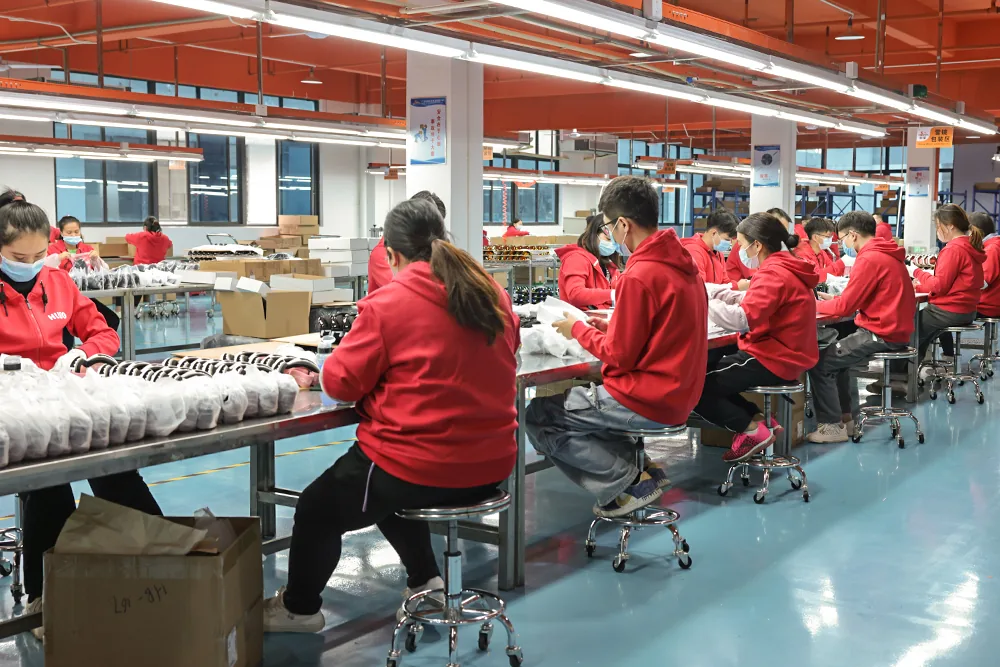
What to inspect during the cleanroom walkthrough:
- Dust-Free Workshop Certification: High-volume optical assembly and lens lamination should operate inside 10,000 to 100,000-class dust-free cleanrooms.
- Air Shower and Gowning Protocols: Verify that production operators pass through functional multi-jet air showers and wear anti-static lint-free suits, hoods, and conductive shoe covers.
- Positive Air Pressure and Temperature Control: Cleanrooms must maintain positive air pressure to prevent ambient factory dust from entering when doors cycle open. Temperature should hold at 20°C–24°C with relative humidity controlled between 45%–60% to ensure uniform curing of anti-fog coatings and adhesives.
Lens manufacturing, coating lines, and assembly QA
Examine the production lines where raw materials transform into finished optical products.
Step 1: Injection molding and raw material control
- Confirm the factory uses virgin optical-grade polymers (e.g., Swiss Grilamid TR90, optical polycarbonate, or Bayer TPU) rather than reground scrap material.
- Check mold maintenance records. High-precision injection molds require scheduled ultrasonic cleaning and polishing to prevent micro-scratches on spherical and toric lens surfaces.
Step 2: Optical coating and surface treatment
- Dielectric Sputter / REVO Mirroring: Inspect the vacuum coating chambers. Check automated thickness monitoring systems that ensure consistent color spectrums and VLT across production runs.
- Anti-Fog Lamination & Flow-Coating: For ski goggles, evaluate how the anti-fog chemical layer is applied and cured onto the inner lens. Ensure automated cleanroom bonding machines seal dual-lens chambers with desiccant-treated perimeter foam.

Step 3: Final assembly and cosmetic inspection
- Inspect final QA workstations. Every finished unit should undergo 100% manual visual inspection under high-CRI 1000+ lux lighting booths to catch surface inclusions, micro-bubbles, pinholes, or strap stitching defects.
In-house optical and physical testing laboratory
A reliable sports eyewear manufacturer maintains an internal testing lab to validate batch quality before third-party certification.
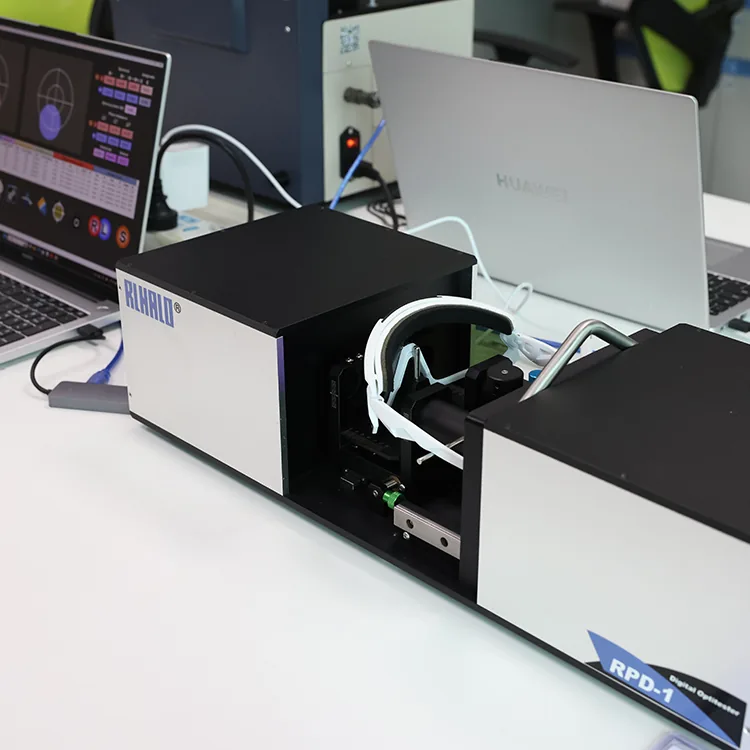
Essential testing equipment to verify on-site:
- Drop-Ball and High-Mass Impact Tester: Drops a 16mm/68g steel ball from a specified height (or fires high-velocity steel projectiles) against the mounted lens to ensure compliance with ANSI Z87.1-2025 и EN 166/174 impact standards without shattering.
- Optical Spectrophotometer: Scans the lens across ultraviolet (280–400nm) and visible light spectra (380–780nm) to verify 100% UV400 cutoff and confirm exact VLT percentage.
- Polarization Efficiency Meter: Confirms that polarized sports sunglasses deliver ≥99% polarizing efficiency on dark lenses and true axis alignment across both eyes.
- Prismatic and Refractive Power Tester: Measures spherical, astigmatic, and prismatic imbalance across the field of view to ensure the lens causes zero eye strain or visual distortion.
- Environmental and Salt Spray Chamber: Subjects metal hinges, electroplated logos, and frame coatings to 24–48 hours of saline fog to simulate heavy sweat and ocean spray.
Factory certifications and social compliance
Documentation verifies institutional management and export compliance. Request verified third-party audit reports rather than accepting self-declared certificates.
| Certification / Audit | Scope and Focus | Standard Authority |
|---|---|---|
| ISO 9001:2015 | Quality Management System & Process Traceability | TÜV / SGS / BSI Accredited |
| BSCI / SMETA | Social Compliance, Labor Rights, & Workplace Safety | Amfori BSCI / Sedex Audited |
| FDA Device Registration | US Import Compliance for Nonprescription Eyewear | US FDA Medical Device Registry |
| CE Product Directives | PPE Regulation (EU) 2016/425, CE (ISO 18527-1:2022 for ski goggles, ISO 12312-1:2022+A11 for sunglasses) | Notified Body Test Reports |
| ANSI Z80.3 / Z87.1 | US Optical Performance & Impact Benchmarks | Accredited Testing Laboratories |
Supplier verification red flags to watch for
During your evaluation, watch for these common operational warning signs:
- Shared or Open-Air Assembly: Assembling dual-lens ski goggles in non-filtered warehouse air (leads to inevitable dust inside the sealed chamber).
- Missing In-House QA Equipment: Relying solely on external vendor lab sheets without daily batch drop-ball or UV verification.
- Inconsistent Batch Colorways: Significant REVO mirror color shifts between sample pieces and bulk shipments.
- Unclear Component Traceability: Inability to trace defective frames back to specific raw material lots or injection shifts.
Frequently asked questions
What cleanroom level is required for ski goggle manufacturing?
A Class 10,000 to Class 100,000 dust-free cleanroom is the industry standard for dual-lens bonding, anti-fog flow coating, and final optical assembly.
How often should batch impact tests be conducted?
Leading manufacturers perform drop-ball impact and optical alignment tests on random production samples from every injection shift or material lot.
What is the difference between a trading company and a direct manufacturer?
Direct manufacturers own their injection machines, cleanroom assembly lines, and in-house testing labs. They provide direct engineering communication, transparent mold ownership, and lower defect response times.
Auditing and Partnering with Hubo Sports
Guangdong Hubo Sports operates 10,000+ m² dust-free cleanroom facilities across 12 production lines, producing over 150,000 units monthly. Certified under ISO 9001, BSCI, and TÜV Rheinland factory audits, our facility houses complete in-house testing laboratories for ANSI Z87.1, EN ISO 18527-1, and UV400 compliance.