Exploring the World of Ski Goggles: A Deep Dive into Polarization
Introduction: The Quest for the Perfect Ski Goggles The Science Behind Ski Goggles
Understanding Polarization: The Basics Every Skier Should Know
스키 고글은 편광이 필요한가?
선명한 시야
스키를 탈 때 즐겁고 안전한 스키 경험을 위해서는 시야의 선명도와 보호가 매우 중요합니다. 자주 묻는 질문 중 하나는 스키 고글에 편광 렌즈를 사용해야 하는지 여부입니다. 렌즈의 편광 렌즈는 수평파를 걸러내 눈부심을 줄여주는데, 이는 눈 덮인 풍경처럼 밝고 반사되는 환경에서 특히 유용합니다. 눈의 반사면은 강한 눈부심을 유발하여 눈을 피로하게 하고 시력에 악영향을 미칠 수 있습니다.
편광 여부는 조건에 따라 다릅니다.
그러나, 스키 고글 편광 렌즈의 필요성은 스키어의 요구 사항과 스키 조건에 따라 달라집니다. 햇볕이 강한 날씨에 자주 스키를 타는 스키어는 편광 렌즈의 눈부심 감소 기능 덕분에 많은 이점을 얻을 수 있습니다. 밝은 햇빛 아래에서 스키를 타는 경우, 편광 고글의 향상된 대비와 선명도는 시야를 크게 개선하여 눈 표면의 변화를 감지하고 더욱 효과적으로 길을 찾을 수 있도록 도와줍니다.
On the other hand, on overcast days, flat light conditions can make it challenging to perceive depth and texture on the snow. Some skiers might find that polarized lenses can diminish visibility in such conditions because they may reduce the overall light transmission, which doesn’t help with the low-contrast, shadowy environment.
Ultimately, the choice of whether ski goggles should be polarized comes down to the skier
‘s environment and personal preference. Many professionals recommend having interchangeable lenses to adapt to different weather conditions, combining polarized options for bright, sunny experiences and non-polarized or photochromic lenses for variable lighting. This flexibility ensures you’re well-equipped to maintain optimal vision on the slopes, regardless of the weather.
편광 스키 고글은 어떻게 작동하나요?
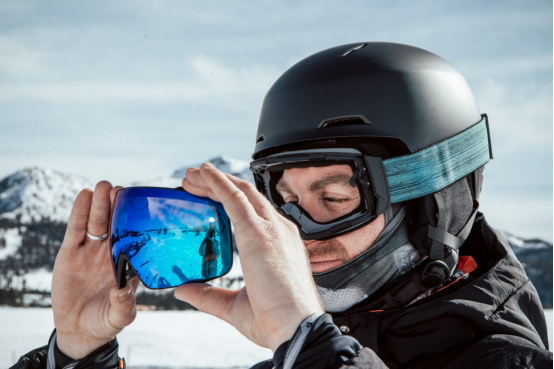
편광 렌즈
Polarized ski goggles operate on a fascinating principle designed to enhance your skiing or snowboarding experience by improving visibility and reducing glare. At their core, polarized lenses are engineered with a special chemical film that helps block horizontal light waves, which are typically responsible for the harsh glare that reflects off flat surfaces like snow. This glare can significantly impede visibility, making it difficult to be seen for the contours and textures of the snowy terrain, which are very important for safe skiing.
The technology behind polarization involves a precise alignment of molecules within the lens. When light strikes a surface, it scatters in all directions but often reflects horizontally, causing blinding glare. Polarized lenses contain vertical filters that allow vertical light waves to pass through while blocking horizontal waves. This selective filtering reduces glare and enhances contrast, allowing skiers to more clearly see undulations, ice patches, and other potential hazards on the slope.
Another advantage of polarized ski goggles is the reduction of eye fatigue. By minimizing glare, your eyes do not have to work as hard to process visual information, especially under bright, sunny conditions. This can significantly enhance comfort during long days on the mountain. Furthermore, by improving visual clarity, polarized lenses can help you make quicker, more accurate decisions on the slopes, such as navigating through moguls or avoiding other skiers.
While polarized lenses offer numerous benefits, they are not without their limitations. One notable drawback is that they can sometimes interfere with the visibility of icy patches, which might blend into the snow since polarization reduces reflection. Therefore, it’s essential to consider the typical conditions you’ll be encountering and whether the trade-offs align with your skiing needs. Despite these nuances, the technology behind polarized ski goggles undeniably contributes to a more comfortable, enjoyable, and safe skiing experience by addressing the unique challenges posed by the snowy environment.
POLARIZED VS NON-POLARIZED SKI GOGGLES?
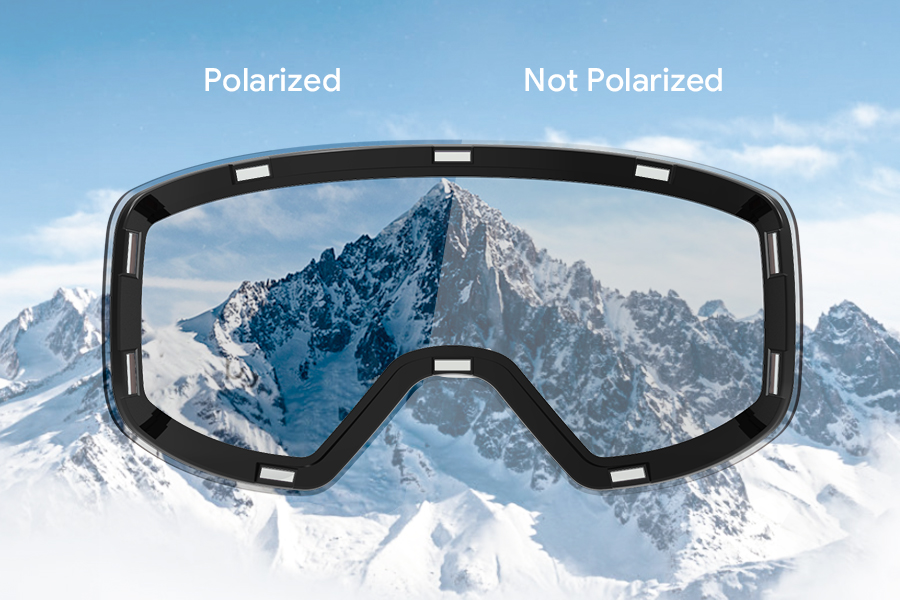
When selecting ski goggles, one of the major decisions you’ll face is whether to opt for polarized or non-polarized lenses. Each has its own sets of advantages and potential drawbacks, specifically tailored to different skiing conditions and personal preferences.
Advantages of Polarized Ski Goggles:
Polarized ski goggles are celebrated for their ability to reduce glare, making them a popular choice among skiers who spend their days in bright, reflective environments. The polarization technology works by filtering out horizontal light waves, which are primarily responsible for the glare you experience on the slopes. This leaves you with enhanced contrast and clarity, helping you to more easily discern between varying terrains. On particularly sunny days, polarized lenses can significantly reduce eye strain, allowing for a more comfortable and enjoyable skiing experience.
Drawbacks of Polarized Ski Goggles:
Despite these benefits, polarized goggles are not without their criticisms. One of the notable disadvantages is that they can sometimes obscure icy patches, which may appear less shiny and more similar to the rest of the snow. This could potentially increase the risk of accidents. Additionally, the high-definition view provided by polarized lenses might not be necessary in conditions where visibility is already reduced, such as during heavy snowfall or fog.
Non-Polarized Ski Goggles:
Non-polarized ski goggles, on the other hand, offer a more universal approach. These lenses are designed to reduce overall brightness and manage standard levels of reflective light but without the specific glare-filtering benefit of polarized lenses. They’re often preferred for their versatility across various weather conditions. On cloudy or overcast days, non-polarized lenses can sometimes offer better visibility compared to their polarized counterparts because they don’t alter visual perception as significantly.
Making the Right Choice
The decision between polarized and non-polarized ski goggles ultimately depends on personal preference and the typical conditions in which you ski. If you frequently ski in areas with lots of bright sunshine and find glare to be a major issue, polarized goggles might enhance your experience. However, if you prefer a more adaptable option or commonly ski in diverse weather conditions, non-polarized goggles could be the way to go. In any case, trying different options and considering your typical skiing environment will help you make the most informed choice.
편광 스키 고글에 대한 FAQ
- 편광 스노우 고글은 무슨 용도인가요?
편광 렌즈는 산란광을 차단하여 눈부심을 제거합니다. 렌즈 사이에 삽입된 편광 필름은 빛의 반사만 차단하고 시야를 개선합니다. 눈 덮인 맑은 날처럼 빛 반사가 매우 눈부신 경우, 편광 렌즈는 이러한 눈부심을 효과적으로 줄여줍니다. - 편광 렌즈의 장점은 무엇입니까?
이러한 보호 안경은 직장, 레크리에이션 활동, DIY 프로젝트 등 다양한 환경에서 잠재적인 눈 부상을 예방하는 데 사용됩니다. - 편광 렌즈의 가격은 얼마인가요?
빛의 편광 원리를 기반으로 제조된 편광 렌즈는 일반적으로 가격이 더 비쌉니다. - 편광 렌즈는 자외선으로부터도 보호해 주나요?
네, 편광 렌즈는 일반적으로 자외선 차단 기능도 갖추고 있어 눈 스포츠를 할 때 자외선으로부터 눈을 보호하는 데 매우 중요합니다. - 편광렌즈는 어떤 환경에서 사용되나요?
편광 렌즈는 눈이나 수면과 같이 강한 반사나 눈부심이 있는 환경에 적합하며, 눈부심을 줄이고 시각적 선명도를 향상시킬 수 있습니다.