Exploring the World of Ski Goggles: A Deep Dive into Polarization
Introduction: The Quest for the Perfect Ski Goggles The Science Behind Ski Goggles
Understanding Polarization: The Basics Every Skier Should Know
هل تحتاج نظارات التزلج إلى الاستقطاب؟
رؤية واضحة
عند التزلج، يُعد وضوح الرؤية وحمايتها أمرًا بالغ الأهمية لتجربة تزلج ممتعة وآمنة. ومن الأسئلة الشائعة: هل يجب أن تكون نظارات التزلج مستقطبة؟ يُقلل الاستقطاب في العدسات من الوهج من خلال تصفية موجات الضوء الأفقية، وهو أمر مفيد بشكل خاص في البيئات الساطعة والعاكسة للضوء، مثل المناظر الطبيعية الثلجية. في هذه الحالة، قد يُسبب السطح العاكس للثلج وهجًا شديدًا، مما قد يُسبب إرهاقًا للعينين ويؤثر سلبًا على البصر.
الاستقطاب أو عدمه يعتمد على الظروف
ومع ذلك، سواء نظارات التزلج تعتمد الحاجة إلى الاستقطاب على احتياجات المتزلجين وظروف التزلج. يستفيد المتزلجون الذين يتزلجون كثيرًا في الأجواء المشمسة من خاصية تقليل الوهج التي توفرها العدسات المستقطبة. إذا كنت تتزلج تحت أشعة الشمس الساطعة، فإن التباين والوضوح المُحسّنين اللذين توفرهما النظارات المستقطبة يُحسّنان رؤيتك بشكل ملحوظ، مما يسمح لك برصد التغيرات في سطح الثلج والتنقل بشكل أكثر فعالية.
On the other hand, on overcast days, flat light conditions can make it challenging to perceive depth and texture on the snow. Some skiers might find that polarized lenses can diminish visibility in such conditions because they may reduce the overall light transmission, which doesn’t help with the low-contrast, shadowy environment.
Ultimately, the choice of whether ski goggles should be polarized comes down to the skier
‘s environment and personal preference. Many professionals recommend having interchangeable lenses to adapt to different weather conditions, combining polarized options for bright, sunny experiences and non-polarized or photochromic lenses for variable lighting. This flexibility ensures you’re well-equipped to maintain optimal vision on the slopes, regardless of the weather.
كيف تعمل نظارات التزلج المستقطبة؟
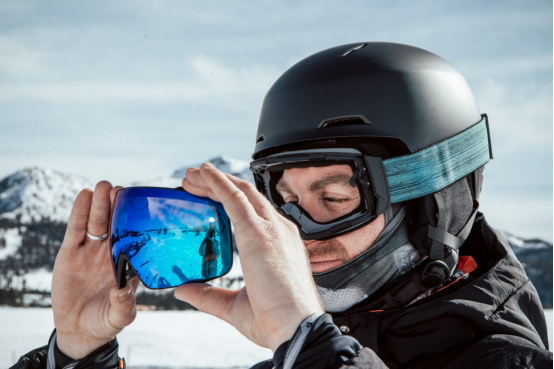
عدسة مستقطبة
Polarized ski goggles operate on a fascinating principle designed to enhance your skiing or snowboarding experience by improving visibility and reducing glare. At their core, polarized lenses are engineered with a special chemical film that helps block horizontal light waves, which are typically responsible for the harsh glare that reflects off flat surfaces like snow. This glare can significantly impede visibility, making it difficult to be seen for the contours and textures of the snowy terrain, which are very important for safe skiing.
The technology behind polarization involves a precise alignment of molecules within the lens. When light strikes a surface, it scatters in all directions but often reflects horizontally, causing blinding glare. Polarized lenses contain vertical filters that allow vertical light waves to pass through while blocking horizontal waves. This selective filtering reduces glare and enhances contrast, allowing skiers to more clearly see undulations, ice patches, and other potential hazards on the slope.
Another advantage of polarized ski goggles is the reduction of eye fatigue. By minimizing glare, your eyes do not have to work as hard to process visual information, especially under bright, sunny conditions. This can significantly enhance comfort during long days on the mountain. Furthermore, by improving visual clarity, polarized lenses can help you make quicker, more accurate decisions on the slopes, such as navigating through moguls or avoiding other skiers.
While polarized lenses offer numerous benefits, they are not without their limitations. One notable drawback is that they can sometimes interfere with the visibility of icy patches, which might blend into the snow since polarization reduces reflection. Therefore, it’s essential to consider the typical conditions you’ll be encountering and whether the trade-offs align with your skiing needs. Despite these nuances, the technology behind polarized ski goggles undeniably contributes to a more comfortable, enjoyable, and safe skiing experience by addressing the unique challenges posed by the snowy environment.
POLARIZED VS NON-POLARIZED SKI GOGGLES?
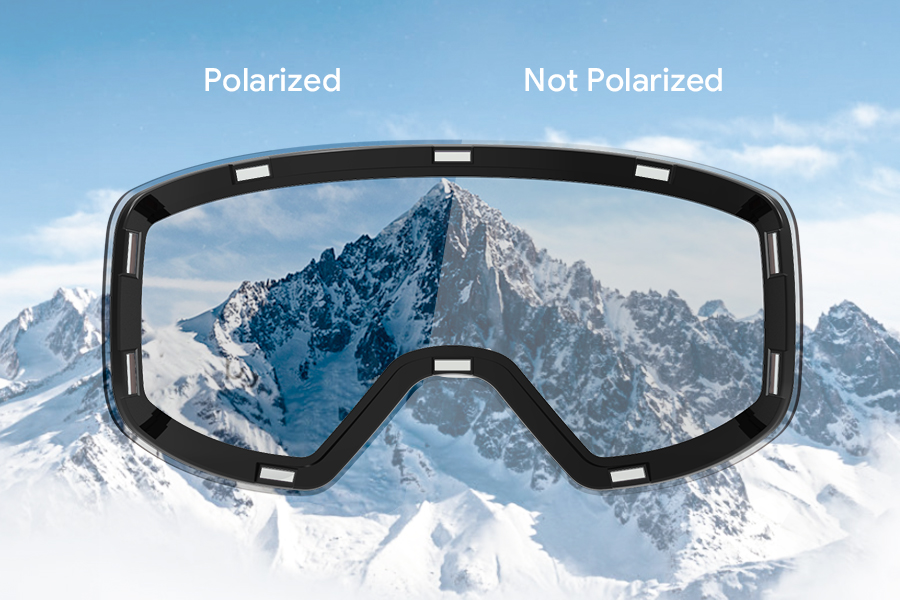
When selecting ski goggles, one of the major decisions you’ll face is whether to opt for polarized or non-polarized lenses. Each has its own sets of advantages and potential drawbacks, specifically tailored to different skiing conditions and personal preferences.
Advantages of Polarized Ski Goggles:
Polarized ski goggles are celebrated for their ability to reduce glare, making them a popular choice among skiers who spend their days in bright, reflective environments. The polarization technology works by filtering out horizontal light waves, which are primarily responsible for the glare you experience on the slopes. This leaves you with enhanced contrast and clarity, helping you to more easily discern between varying terrains. On particularly sunny days, polarized lenses can significantly reduce eye strain, allowing for a more comfortable and enjoyable skiing experience.
Drawbacks of Polarized Ski Goggles:
Despite these benefits, polarized goggles are not without their criticisms. One of the notable disadvantages is that they can sometimes obscure icy patches, which may appear less shiny and more similar to the rest of the snow. This could potentially increase the risk of accidents. Additionally, the high-definition view provided by polarized lenses might not be necessary in conditions where visibility is already reduced, such as during heavy snowfall or fog.
Non-Polarized Ski Goggles:
Non-polarized ski goggles, on the other hand, offer a more universal approach. These lenses are designed to reduce overall brightness and manage standard levels of reflective light but without the specific glare-filtering benefit of polarized lenses. They’re often preferred for their versatility across various weather conditions. On cloudy or overcast days, non-polarized lenses can sometimes offer better visibility compared to their polarized counterparts because they don’t alter visual perception as significantly.
Making the Right Choice
The decision between polarized and non-polarized ski goggles ultimately depends on personal preference and the typical conditions in which you ski. If you frequently ski in areas with lots of bright sunshine and find glare to be a major issue, polarized goggles might enhance your experience. However, if you prefer a more adaptable option or commonly ski in diverse weather conditions, non-polarized goggles could be the way to go. In any case, trying different options and considering your typical skiing environment will help you make the most informed choice.
الأسئلة الشائعة حول نظارات التزلج المستقطبة
- ما هي استخدامات نظارات الثلج المستقطبة؟
العدسات المستقطبة تزيل الوهج بحجب الضوء المتناثر. طبقة الاستقطاب المحصورة بين العدسات تحجب انعكاس الضوء فقط، مما يُحسّن مجال الرؤية. في الأيام المشمسة على الثلج، حيث يكون انعكاس الضوء ساطعًا للغاية، تُخفف العدسات المستقطبة هذا الوهج بفعالية. - ما هي مزايا العدسات المستقطبة؟
يتم استخدامها في مختلف الأماكن، بما في ذلك أماكن العمل، والأنشطة الترفيهية، والمشاريع المنزلية، للحماية من إصابات العين المحتملة. - ما هي تكلفة العدسات المستقطبة؟
العدسات المستقطبة، والتي يتم تصنيعها على أساس مبدأ استقطاب الضوء، يكون سعرها أعلى عمومًا. - هل العدسات المستقطبة تحمي أيضًا من الأشعة فوق البنفسجية؟
نعم، عادةً ما تتمتع العدسات المستقطبة أيضًا بحماية من الأشعة فوق البنفسجية، وهو أمر مهم جدًا لحماية العينين من أضرار الأشعة فوق البنفسجية أثناء ممارسة الرياضات الثلجية. - في أي بيئة يتم استخدام العدسات المستقطبة؟
تعتبر العدسات المستقطبة مناسبة للبيئات ذات الانعكاسات القوية أو الوهج، مثل الأسطح الثلجية أو المائية، حيث يمكنها تقليل الوهج وتحسين الوضوح البصري.