Exploring the World of Ski Goggles: A Deep Dive into Polarization
Introduction: The Quest for the Perfect Ski Goggles The Science Behind Ski Goggles
Understanding Polarization: The Basics Every Skier Should Know
Os óculos de esqui precisam ser polarizados?
Visão Clara
Ao esquiar, a clareza visual e a proteção são muito importantes para uma experiência agradável e segura. Uma pergunta frequente é se os óculos de esqui devem ser polarizados. A polarização nas lentes reduz o ofuscamento ao filtrar as ondas de luz horizontais, o que é particularmente vantajoso em ambientes claros e reflexivos, como paisagens com neve. Nesses casos, a superfície reflexiva da neve pode causar ofuscamento intenso, o que pode causar cansaço nos olhos e prejudicar a visão.
Polarizado ou não depende das condições
No entanto, se óculos de esqui A necessidade de polarização depende das necessidades dos esquiadores e das condições de esqui. Esquiadores que costumam esquiar em condições ensolaradas costumam se beneficiar da função de redução de brilho das lentes polarizadas. Se você estiver esquiando sob luz solar intensa, o contraste e a nitidez aprimorados proporcionados pelos óculos polarizados podem melhorar significativamente sua visão, permitindo que você detecte mudanças na superfície da neve e navegue com mais eficiência.
On the other hand, on overcast days, flat light conditions can make it challenging to perceive depth and texture on the snow. Some skiers might find that polarized lenses can diminish visibility in such conditions because they may reduce the overall light transmission, which doesn’t help with the low-contrast, shadowy environment.
Ultimately, the choice of whether ski goggles should be polarized comes down to the skier
‘s environment and personal preference. Many professionals recommend having interchangeable lenses to adapt to different weather conditions, combining polarized options for bright, sunny experiences and non-polarized or photochromic lenses for variable lighting. This flexibility ensures you’re well-equipped to maintain optimal vision on the slopes, regardless of the weather.
Como funcionam os óculos de esqui polarizados?
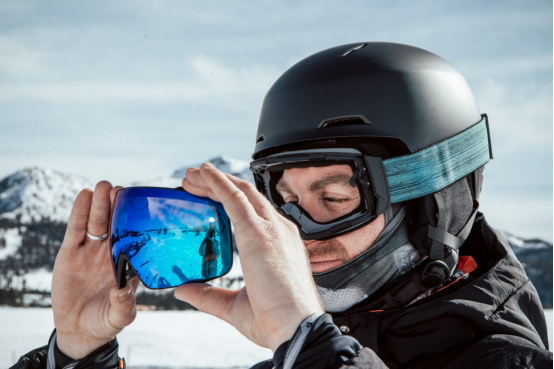
Lente polarizada
Polarized ski goggles operate on a fascinating principle designed to enhance your skiing or snowboarding experience by improving visibility and reducing glare. At their core, polarized lenses are engineered with a special chemical film that helps block horizontal light waves, which are typically responsible for the harsh glare that reflects off flat surfaces like snow. This glare can significantly impede visibility, making it difficult to be seen for the contours and textures of the snowy terrain, which are very important for safe skiing.
The technology behind polarization involves a precise alignment of molecules within the lens. When light strikes a surface, it scatters in all directions but often reflects horizontally, causing blinding glare. Polarized lenses contain vertical filters that allow vertical light waves to pass through while blocking horizontal waves. This selective filtering reduces glare and enhances contrast, allowing skiers to more clearly see undulations, ice patches, and other potential hazards on the slope.
Another advantage of polarized ski goggles is the reduction of eye fatigue. By minimizing glare, your eyes do not have to work as hard to process visual information, especially under bright, sunny conditions. This can significantly enhance comfort during long days on the mountain. Furthermore, by improving visual clarity, polarized lenses can help you make quicker, more accurate decisions on the slopes, such as navigating through moguls or avoiding other skiers.
While polarized lenses offer numerous benefits, they are not without their limitations. One notable drawback is that they can sometimes interfere with the visibility of icy patches, which might blend into the snow since polarization reduces reflection. Therefore, it’s essential to consider the typical conditions you’ll be encountering and whether the trade-offs align with your skiing needs. Despite these nuances, the technology behind polarized ski goggles undeniably contributes to a more comfortable, enjoyable, and safe skiing experience by addressing the unique challenges posed by the snowy environment.
POLARIZED VS NON-POLARIZED SKI GOGGLES?
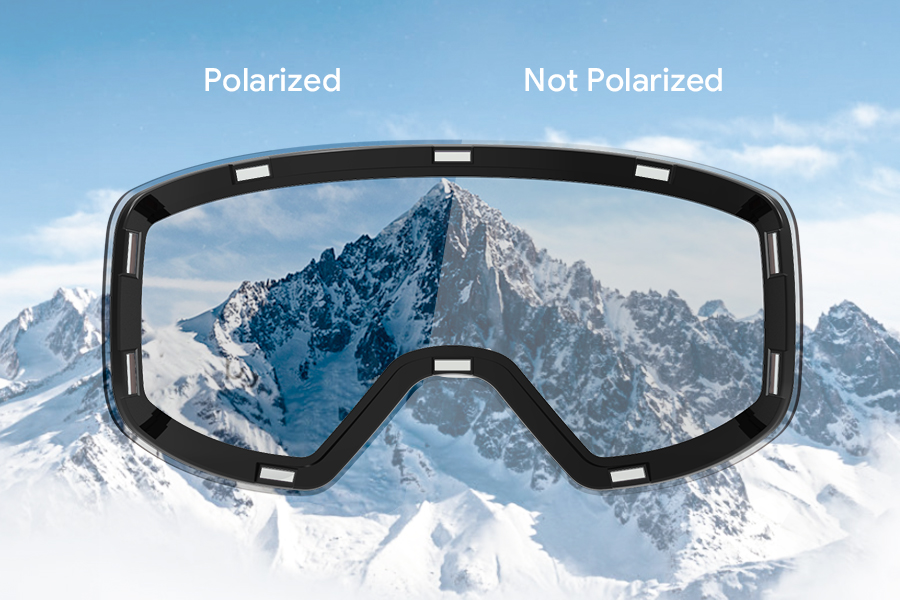
When selecting ski goggles, one of the major decisions you’ll face is whether to opt for polarized or non-polarized lenses. Each has its own sets of advantages and potential drawbacks, specifically tailored to different skiing conditions and personal preferences.
Advantages of Polarized Ski Goggles:
Polarized ski goggles are celebrated for their ability to reduce glare, making them a popular choice among skiers who spend their days in bright, reflective environments. The polarization technology works by filtering out horizontal light waves, which are primarily responsible for the glare you experience on the slopes. This leaves you with enhanced contrast and clarity, helping you to more easily discern between varying terrains. On particularly sunny days, polarized lenses can significantly reduce eye strain, allowing for a more comfortable and enjoyable skiing experience.
Drawbacks of Polarized Ski Goggles:
Despite these benefits, polarized goggles are not without their criticisms. One of the notable disadvantages is that they can sometimes obscure icy patches, which may appear less shiny and more similar to the rest of the snow. This could potentially increase the risk of accidents. Additionally, the high-definition view provided by polarized lenses might not be necessary in conditions where visibility is already reduced, such as during heavy snowfall or fog.
Non-Polarized Ski Goggles:
Non-polarized ski goggles, on the other hand, offer a more universal approach. These lenses are designed to reduce overall brightness and manage standard levels of reflective light but without the specific glare-filtering benefit of polarized lenses. They’re often preferred for their versatility across various weather conditions. On cloudy or overcast days, non-polarized lenses can sometimes offer better visibility compared to their polarized counterparts because they don’t alter visual perception as significantly.
Making the Right Choice
The decision between polarized and non-polarized ski goggles ultimately depends on personal preference and the typical conditions in which you ski. If you frequently ski in areas with lots of bright sunshine and find glare to be a major issue, polarized goggles might enhance your experience. However, if you prefer a more adaptable option or commonly ski in diverse weather conditions, non-polarized goggles could be the way to go. In any case, trying different options and considering your typical skiing environment will help you make the most informed choice.
Perguntas frequentes sobre óculos de esqui polarizados
- Para que servem os óculos de neve polarizados?
Lentes polarizadas eliminam o ofuscamento, cortando a luz difusa. A película polarizadora entre as lentes apenas corta o reflexo da luz e melhora o campo de visão. Em dias ensolarados na neve, onde o reflexo da luz é muito ofuscante, as lentes polarizadas podem reduzir esse ofuscamento com eficácia. - Quais são as vantagens das lentes polarizadas?
Eles são usados em vários ambientes, incluindo locais de trabalho, atividades recreativas e projetos do tipo "faça você mesmo", para proteger contra possíveis lesões oculares. - Quanto custam as lentes polarizadas?
Lentes polarizadas, que são fabricadas com base no princípio da polarização da luz, geralmente têm um preço mais alto. - As lentes polarizadas também protegem contra raios UV?
Sim, as lentes polarizadas geralmente também têm proteção UV, o que é muito importante para proteger os olhos dos danos UV durante esportes na neve. - Em que ambiente as lentes polarizadas são usadas?
Lentes polarizadas são adequadas para ambientes com fortes reflexos ou ofuscamento, como neve ou superfícies de água, pois podem reduzir o ofuscamento e melhorar a clareza visual.