 انتقل إلى المحتوى

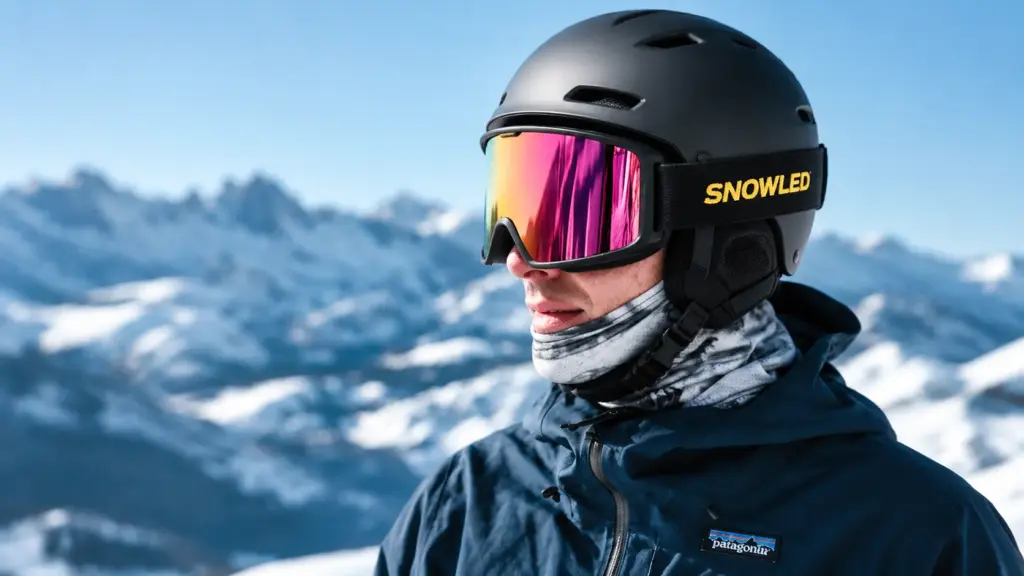
In the performance sports eyewear market, fit is not merely a subjective comfort preference—it is a critical mechanical seal. A ski goggle that fails to contour precisely to the rider’s facial bone structure creates pressure points, compromises optical alignment, and allows freezing ambient air to bypass perimeter seals. When paired with a ski helmet, mismatched geometries cause the dreaded “gaper gap” or block vital exhaust channels, resulting in instant inner-lens condensation. For eyewear brand owners and sourcing managers, mastering frame geometry variations and helmet integration tolerances is the most effective way to eliminate return rates and build customer loyalty.

Figure 1: Precision CAD alignment between ski goggle upper frame and helmet brim eliminating thermal turbulence.
Anatomy of Fit: Asian Fit vs. Western Fit Frame Geometry
Facial morphology varies substantially across global markets. Sourcing a single “universal” mold frequently leads to severe fit defects: Western users often experience excessive pressure on the nasal bridge or brow, while East Asian riders suffer from air leaks under the nose arch and pinching at the outer cheekbones. Professional OEM manufacturing addresses these disparities through two primary engineering levers: base curve adjustment and customized multi-density foam tailoring.

Figure 2: Base curvature radius and nasal foam pocket comparison between Standard Western Fit and Asian Fit profiles.
The table below illustrates the key structural differences required when engineering molds and foam assemblies for Western versus Asian demographic markets:
| Engineering Parameter | Standard / Western Fit | Asian Fit / Low Bridge Fit | OEM Functional Impact |
|---|---|---|---|
| Frame Base Curve (BC) | BC 7.5 – BC 8.5 (Steeper wrap) | BC 5.5 – BC 6.5 (Flatter curvature) | Prevents frame lateral edges from digging into prominent zygomatic arches (cheekbones). |
| Nose Bridge Foam Depth | 8 mm – 12 mm standard foam | 15 mm – 20 mm high-resilience foam | Fills the nasal gap created by flatter bridge profiles to prevent cold drafts and moisture infiltration. |
| Nasal Cavity Width | Narrower, higher apex arch | Wider, shallow contoured arch | Distributes perimeter clamping force evenly without restricting nasal breathing passages. |
| Cheek Contact Angle | Moderate inward taper | Reduced bottom-rim rake angle | Prevents the goggle frame from being lifted off the face when smiling or clenching jaws. |
Engineering Seamless Helmet Integration: Brim Curvature & Exhaust Vent Alignment
A modern ski goggle does not operate in isolation; it functions as part of an integrated aerodynamic and thermodynamic headwear system. When a rider descends at high velocity, moisture-laden air vaporized from body heat rises through the top frame ventilation. If the helmet brim obstructs these exhaust ports or deflects high-pressure oncoming wind into the upper frame seal, condensation forms instantly on the inner lens surface.

Figure 3: Thermal vapor evacuation pathway from goggle top open-cell foam through helmet internal EPS intake channels.
To achieve true seamless compatibility across major helmet brands, OEM engineers must control three critical spatial variables:
- Upper Brim Arc Matching: The top radius of the goggle frame must match standard helmet brim sweeps (typically an arc radius of R125 mm to R140 mm). An excessive crown height causes the helmet to push the goggle down onto the wearer’s nose bridge.
- Ventilation Channel Alignment (Vent-to-Vent Interlock): The breathable open-cell reticulated foam on the upper frame must align directly with the frontal intake ports of the helmet liner, creating a continuous low-pressure chimney effect that actively evacuates humid air.
- Forehead Flush Depth: The vertical offset between the goggle lens apex and the helmet frontal shell must remain within 1.5 mm to 3.0 mm to prevent micro-vortices and wind whistle at high speeds.
Strap Outrigger Articulation & Pressure Distribution under Helmet Tension
Standard goggle straps attached directly to the frame chassis work adequately when worn over a beanie. However, when stretched over a rigid ski helmet shell (which adds approximately 40 mm to 60 mm in total head width), direct-mounted straps pull the frame laterally at an acute angle. This lateral tension bends the flexible TPU frame, flattening the front curvature, causing optical distortion across the lens, and breaking the orbital seal near the temples.
Articulated strap outriggers solve this mechanical problem by moving the strap pivot anchor 15 mm to 25 mm forward and outward. When tensioned against a helmet, the outrigger arms rotate freely, transferring the pulling vector purely into perpendicular face-sealing force. This ensures that the triple-layer foam maintains uniform pressure around the eyes and temples regardless of helmet shell thickness.
OEM Manufacturing Checklist: Specifying Custom Molds & Foam Assemblies
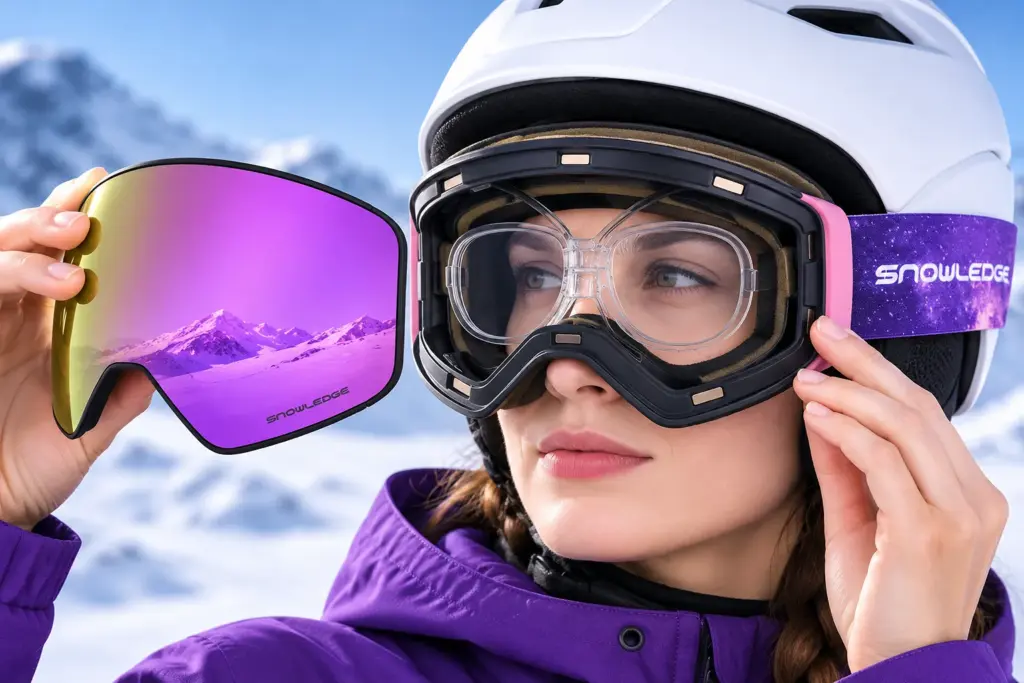
When developing private-label snow goggles or commissioning custom injection tooling with an OEM manufacturer like Hubo Sports, specifying the correct material composition and dimensional tolerances during the DFM (Design for Manufacturability) stage prevents costly mold modifications later.
| Component / Feature | Recommended Engineering Spec | Quality Verification Standard |
|---|---|---|
| Chassis Material | High-grade Thermoplastic Polyurethane (TPU, Shore 75A–85A) | Cold-flexibility retention tested down to -25°C without brittleness (EN ISO 18527-1). |
| Face Foam Assembly | Triple-layer laminated foam (High-density base + Breathable mid-layer + Hypoallergenic micro-fleece) | Flame-lamination adhesion test; zero delamination after 48-hour sweat and humidity chamber cycle. |
| Lens-to-Frame Lock | Multi-point rare-earth N52 magnetic array with secondary mechanical lever locks | Retains lens retention under high-velocity drop test and lateral torsion forces. |
| Strap Assembly | 45 mm – 50 mm jacquard elastic with dual silicone anti-slip backing waves | 10,000-cycle stretch elasticity recovery test; zero slippage on glossy or matte helmet shells. |
Summary & Procurement Recommendations for Sourcing Managers
Achieving market-leading fit requires a systematic approach to product line planning. For brands distributing globally, offering a dual-fit product strategy—launching a flagship model with interchangeable Standard Fit and Asian Fit foam gaskets, or maintaining dedicated SKUs—is the industry benchmark for reducing return rates and maximizing user satisfaction.
As an established OEM/ODM sports eyewear manufacturer with over 16 years of injection molding and optical engineering expertise, Hubo Sports provides end-to-end prototyping, 3D optical simulation, and mold development for ski goggles, motocross goggles, and safety eyewear. Whether you are developing custom helmet-matching frame profiles or expanding your private-label lineup, our engineering team ensures your products meet rigorous global compliance standards including ANSI Z87.1 and EN ISO 18527-1.

 Arabic
 English
 French
 German
 Hindi
 Italian
 Japanese
 Korean
 Portuguese
 Russian
 Spanish