Why Does Goggle Foam Material Matter?
When selecting replacement padding or sourcing finished outdoor sports goggles, many buyers and product managers overlook one critical component: the face foam. Confusing open-cell 그리고 closed-cell foam is a common mistake that often leads to severe product issues down the line, including lens fogging, water absorption, freezing, and a stifling fit.
For cycling sunglasses, ski goggles, and mountaineering eyewear, open-cell and closed-cell are the two dominant foam structures. Each features a completely different cellular design, resulting in opposite performances in breathability, waterproofing, and wind resistance. Get the material wrong, and even the most advanced anti-fog lens technology won’t save the user experience.
Drawing on years of high-performance eyewear manufacturing expertise at HUBO Sports, this guide breaks down the structural differences between these two foam types, matches them to the right outdoor sports, and shares professional maintenance tips.
The Core Structural Difference: Internal Cell Layout
The defining difference between these two materials lies in their internal cellular geometry:
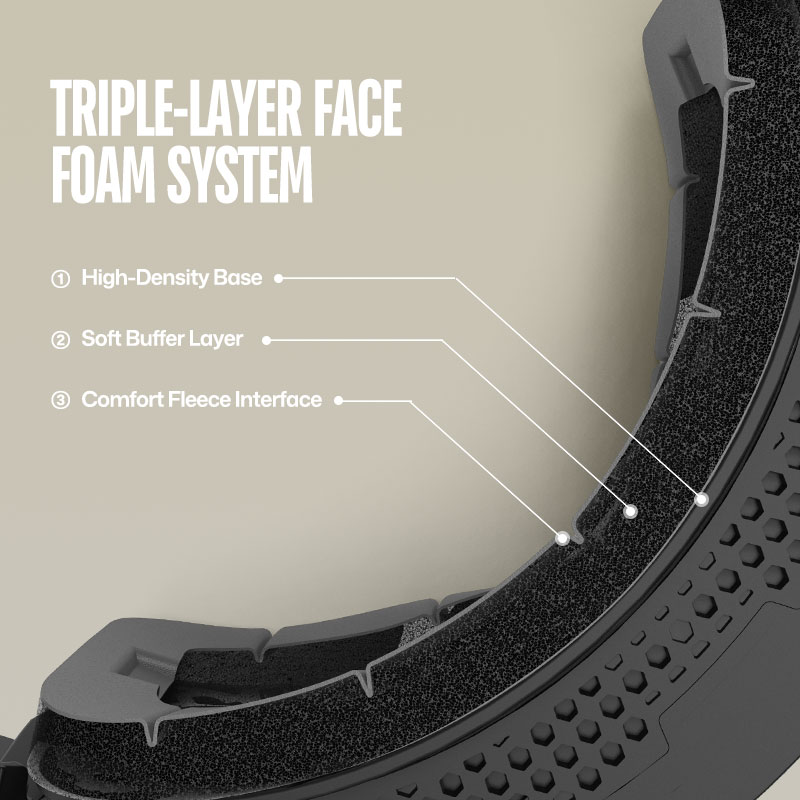
- Open-Cell Foam: This material consists of interconnected, honeycomb-like pores that run throughout the entire foam matrix. This open structure creates unobstructed pathways for air and moisture to circulate freely.
- Closed-Cell Foam: Conversely, closed-cell foam is made of millions of tiny, independent, sealed air bubbles. Because each air pocket is completely enclosed by the rubber or plastic base material, liquid and air are blocked from passing through.
This basic geometric distinction directly dictates how each foam performs under harsh outdoor conditions.
Open-Cell Foam: Maximum Airflow, High Absorption
Thanks to its interconnected pores, open-cell foam offers outstanding breathability and comfort.
The Advantages:
- Superior Ventilation: Heat and sweat vapor evaporated from the skin can vent through the open pores effortlessly. This natural airflow helps exhaust humid air from the goggle cavity, acting as a crucial support system for the lens’s anti-fog coating.
- Plush Comfort: Open-cell foam is incredibly soft, lightweight, and highly compressible, which minimizes facial pressure points during long hours of wear.
The Drawbacks:
- The “Sponge” Effect: The interconnected cells act like a literal sponge, absorbing melted snow, rain, and heavy sweat.
- The Freezing Hazard: In sub-zero alpine conditions, any absorbed water will freeze into stiff, ice-cold blocks. This destroys the foam’s elasticity, creates gaps where cold wind can whistle through, and causes immediate lens fogging.
Best Suited For: Cycling glasses, running sunglasses, and hiking eyewear where high-sweat breathability is critical, and sub-zero freezing is not a threat.
Closed-Cell Foam: Weatherproof Shielding, Zero Air Exchange
With its sealed-bubble structure, closed-cell foam serves as an impenetrable physical barrier.
The Advantages:
- Waterproof & Windproof: Liquid water, snow, and freezing wind cannot penetrate the foam’s interior. It maintains consistent sealing, flexibility, and insulation even in heavy snowstorms and extreme cold. This makes it a staple material for alpine ski goggles.
- Durability: Closed-cell foam does not degrade or rot from sweat absorption, extending the product’s service life.
The Drawbacks:
- Heat Accumulation: Because it blocks airflow, single-layer closed-cell foam can quickly cause facial stuffiness and sweat buildup during high-intensity workouts.
How Premium Brands Fix This: To bypass the breathability issue, high-end ski goggles use closed-cell foam as the sealing base, but incorporate engineered ventilation slots in the goggle frame. This delivers wind insulation and proper air circulation simultaneously.
The Industry Standard: Multi-Layer Composite Foam
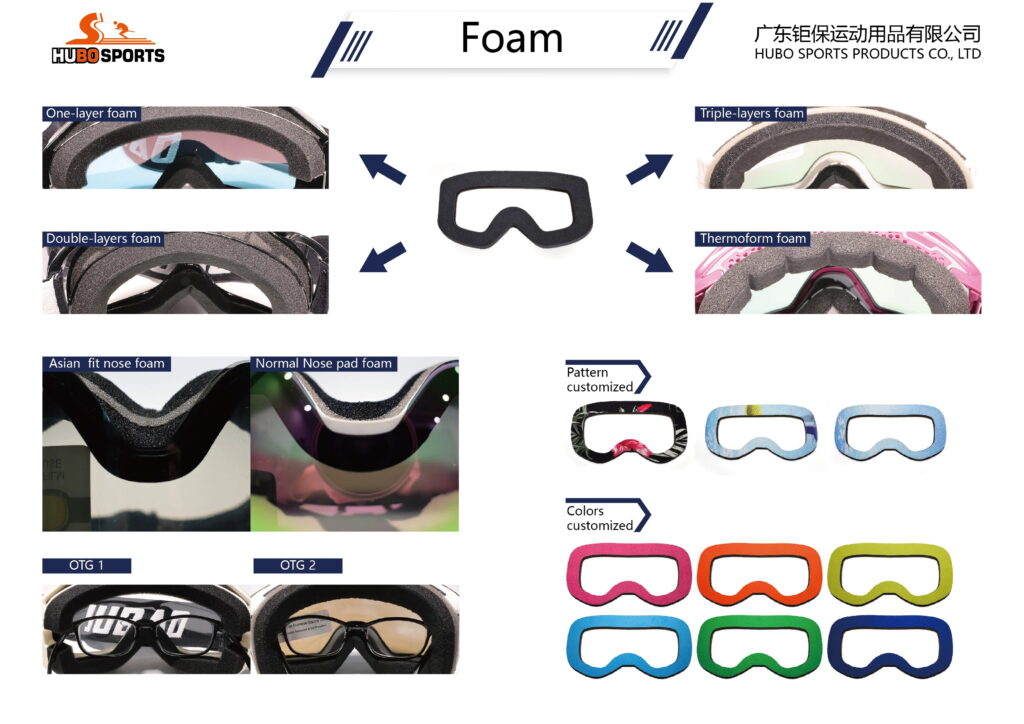
To capture the best of both worlds, premium outdoor eyewear manufacturers rely on multi-layer composite foam structures. This hybrid design eliminates the weaknesses of individual materials by layering them strategically:
- The Skin-Contact Layer: A thin layer of soft, moisture-wicking open-cell foam (often lined with hypoallergenic fleece) that rests gently against the skin to absorb sweat.
- The Buffer Layer: A medium-density transition foam designed to absorb impacts and distribute pressure evenly.
- The Base Sealing Layer: A durable, windproof, and waterproof closed-cell foam that seals the frame against the elements.
This composite approach is the standard configuration for HUBO Sports’ premium, EN ISO 18527-1:2022-certified ski goggles.
Quick Sourcing & Maintenance Guide
How to Match Materials to Sports:
- For Cycling, Running, & Fishing Goggles: Prioritize open-cell dominated or highly ventilated foam layouts to maximize sweat evaporation.
- For Skiing, Ice Climbing, & Mountaineering Goggles: Always choose a closed-cell based composite foam to withstand sub-zero temperatures, freezing moisture, and high winds.
Professional Maintenance Tips:
To prevent premature aging and mold, never scrub goggle foam with rough cloths or abrasive cleaners. After a session, let the goggles air-dry completely in a well-ventilated space before packing them away. Storing damp goggles in a sealed pouch will warp the foam cells and accelerate material degradation.
결론
Understanding the physics of open-cell vs. closed-cell foam is essential for sourcing high-performance sports eyewear that actually performs in the field.
At HUBO Sports, we design and customize specialized foam configurations for global OEM/ODM clients based on target sports, regional climates, and specific regulatory standards (like EN ISO 18527-1:2022). Contact us today to optimize your next product line for maximum performance and market competitiveness.