For skiers, clear vision is not just about comfort, but also about safety. When hitting the slopes at high speed, a foggy ski goggle lens can be a fatal hazard. However, there has been a long-standing debate in the global ski market: is the anti-fog function of ski goggles an essential feature or just a marketing gimmick? Today’s article will help answer this question.
What is Anti-Fog Function?
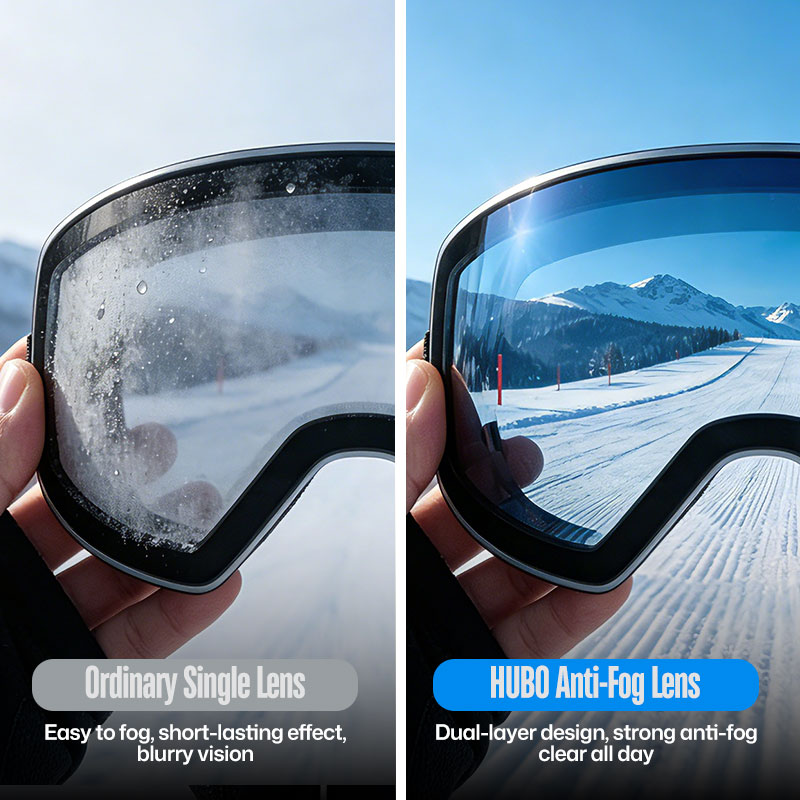
The anti-fog function of ski goggles refers to the core performance that prevents fog from forming on the inner surface of the lens due to temperature difference and water vapor condensation, through structures, coatings, ventilation and other technologies, so as to maintain clear vision throughout the skiing process. The fog is essentially the hot air and sweat exhaled from the face, which liquefies into small water droplets when it meets the cold lens. For skiers, fogging means “blind skiing in an instant”, which directly endangers personal safety and skiing experience.
How Does the Anti-Fog Function of Ski Goggles Work?
The core principle of ski goggle anti-fog is to block direct contact between hot and cold air, quickly discharge moisture and prevent water vapor from adhering. It is usually achieved through the synergy of three technologies: first, temperature difference isolation – double-layer lenses form a constant temperature air interlayer to reduce the temperature difference between the inner and outer lenses and avoid liquefaction of hot air when encountering cold; second, water vapor dispersion – the inner coating absorbs or spreads water vapor to prevent it from forming fog beads; third, air circulation – the ventilation holes on the frame form convection to discharge the hot air from the face and reduce moisture accumulation. A single technology can hardly achieve long-term anti-fog effect; only the combination of the three can ensure stable performance.
Current Implementation Methods of Ski Goggle Anti-Fog Function and Their Comparison
At present, there are three mainstream anti-fog technologies in the global ski goggle market, with obvious differences in market share, effect and cost, which are suitable for different customer groups and usage scenarios:
1. Double-layer lens + anti-fog coating (entry-level):
No goggle fits every helmet perfectly, but a well-designed frame with a low-profile top edge and a helmet-compatible strap will work with the majority. Offering different frame sizes (small/medium/large) is the most reliable solution.
2. Active ventilation/window design (mid-range):
Equipped with ventilation holes on the top and bottom of the frame, or a one-click open structure, which accelerates the discharge of hot air and is suitable for skiers with high exercise intensity.
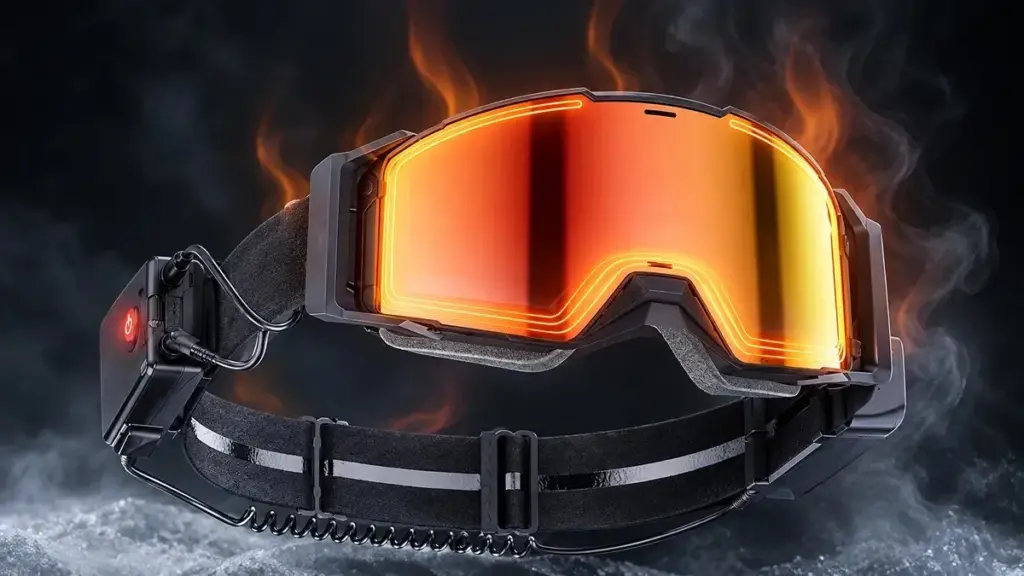
3. Electric heating anti-fog (high-end):
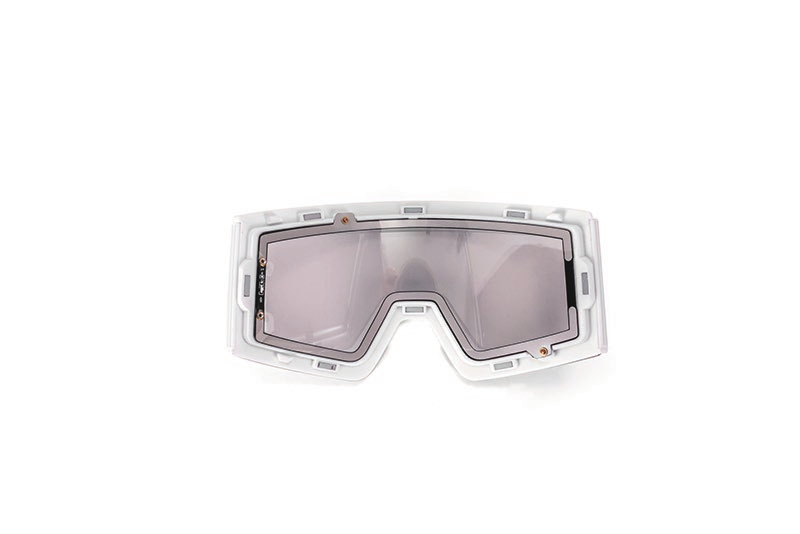
ITO heating film is embedded in the lens, which is heated by power supply to prevent condensation. It is mainly used in professional ski goggles and products for extremely cold areas.
Comparison of Their Advantages, Disadvantages and Effective Duration
| Anti-fog technology type | Anti-fog effective duration | Advantage | Disadvantage |
| Single-layer coating | 0.5-1hour | low price and light weight | easy to fog, short service life. |
| Double-layer + coating | 2-3 hours | high cost performance and durability | easy to fail in extreme temperature difference (e.g., indoor to -15℃ ski resort), and the coating is afraid of scratches. |
| Double-layer +ventilation | 4-6 hours | long-lasting and strong adaptability | easy to leak wind and snow in strong wind. |
| Electric heating | 4-7 hours (depending on battery capacity) | stable performance in -30℃ extreme cold and high humidity environment, clear vision throughout | need charging, increased weight and higher price. |
How to Choose the Right Ski Goggles with Anti-Fog Function
When choosing ski goggles with anti-fog function for overseas markets or personal use, you can follow these four principles:
1. Choose according to the scenario: beginners/leisure skiers choose double-layer + ventilation; enthusiasts/extreme cold users choose electric heating; myopic skiers prefer OTG models that can be worn with glasses.
2. Focus on core configurations: must have double-layer lenses, inner anti-fog coating and multiple ventilation holes; avoid low-cost single-layer models without coating.
3. Test the fit: choose goggles with heightened sponge for Asian face shapes, which are sealed and airtight to prevent fogging. 4. Avoid pitfalls: do not trust “temporary anti-fog sprays”, which fail in 1 hour and damage the lens
Introduction to HUBO Ski Goggles Anti-Fog Function
As a professional ski goggle manufacturer focusing on the global market, HUBO has launched a dual anti-fog solution of “electric heating + double-layer magnetic suction”, which is suitable for professional and extreme scenarios and has won wide recognition from overseas customers:
• ITO heating film technology:
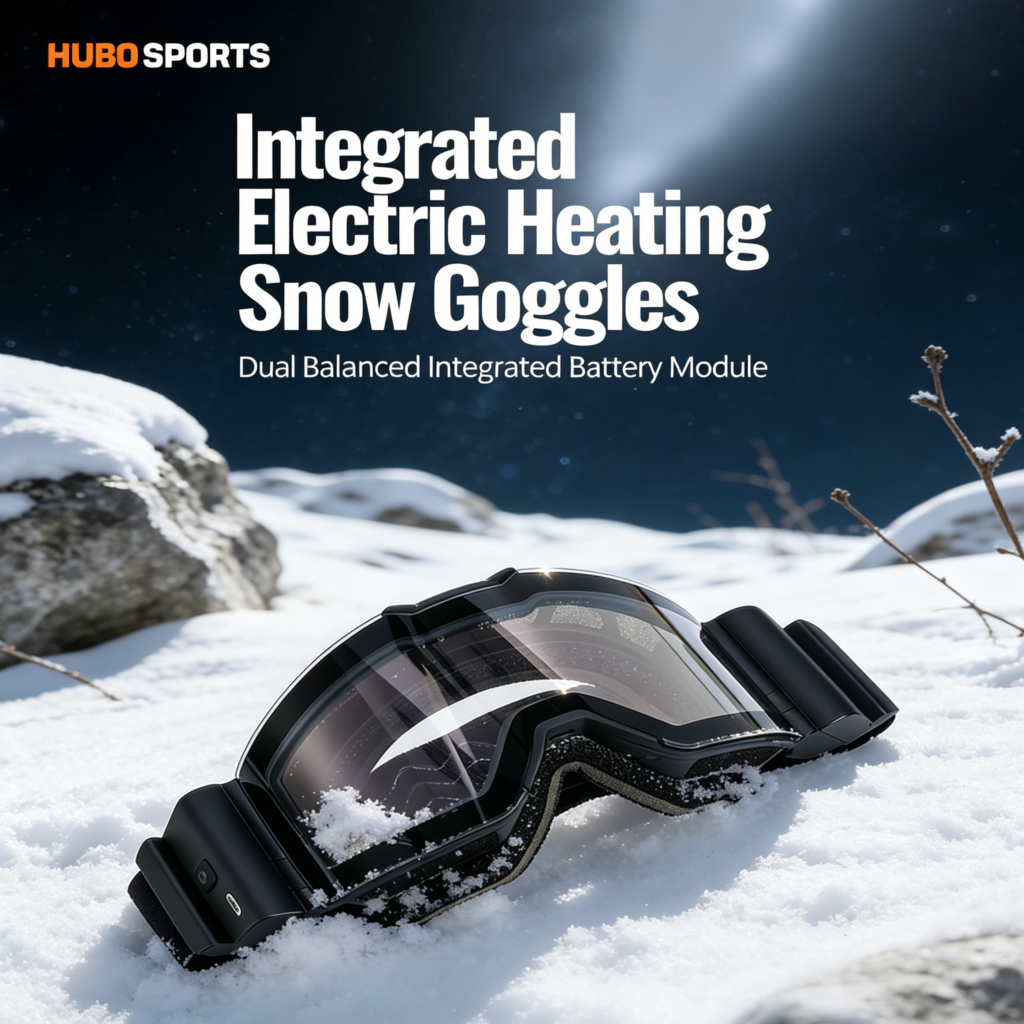
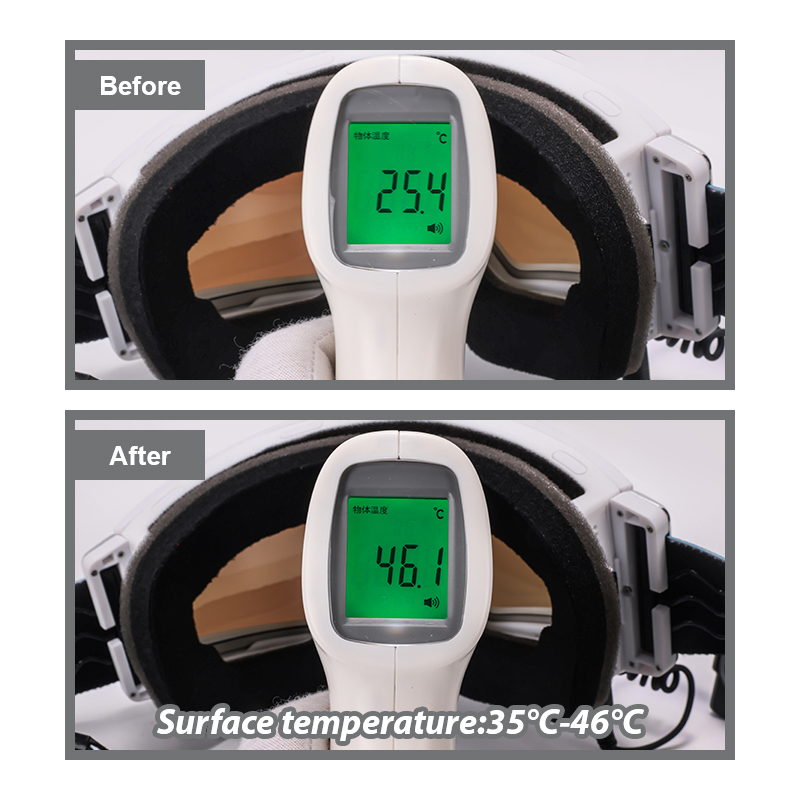
three-speed temperature adjustment, 7 hours of battery life at low gear, 5 hours at medium gear and 4 hours at high gear, no fog in -30℃ extreme cold environment.
• Magnetic suction double-layer lens:
quick lens replacement, the air interlayer in the middle insulates heat, and the inner nano hydrophilic coating absorbs water vapor without fogging.
• Optimized ventilation:
multi-hole convection of the frame reduces heating load, and no fogging even when sweating.
Conclusion
For global skiers and overseas buyers, the anti-fog function of ski goggles is definitely a necessity, not a gimmick. Fogging directly threatens skiing safety, and high-quality anti-fog performance can improve reaction speed and increase braking distance. For daily leisure skiing, “double-layer lens + anti-fog coating + ventilation” is sufficient; for professional or extreme cold scenarios, HUBO electric heating ski goggles are a more reliable choice. Clear vision is the foundation of safe and pleasant skiing, and it is also the core competitiveness of ski goggles in the global market.