 Saltar al contenido

The competitive logic of the ski helmet market is changing.
For years, brands differentiated products through individual specifications: a new impact-management structure, a lighter shell, more vents or a different shell material. Sourcing teams compared feature lists, while consumers responded to prominent technology labels. That approach was easy to communicate. As widely used protection technologies become more common, however, one additional feature is less likely to create a durable advantage.
For the 2026/27 season, attention is shifting to the complete user experience. Safety construction, fit, weight, ventilation, goggle compatibility, youth sizing, material information and after-sales guidance must work together within one product program. BoardSport Source’s 2026/27 retail buyer’s guide identifies safety technology, comfort and fit, sustainable materials, integrated functions, youth products and retailer support as major directions for the season.
The question for product teams is no longer simply, “What features does this helmet have?” It is, “What problem do these features solve when they are used together?”
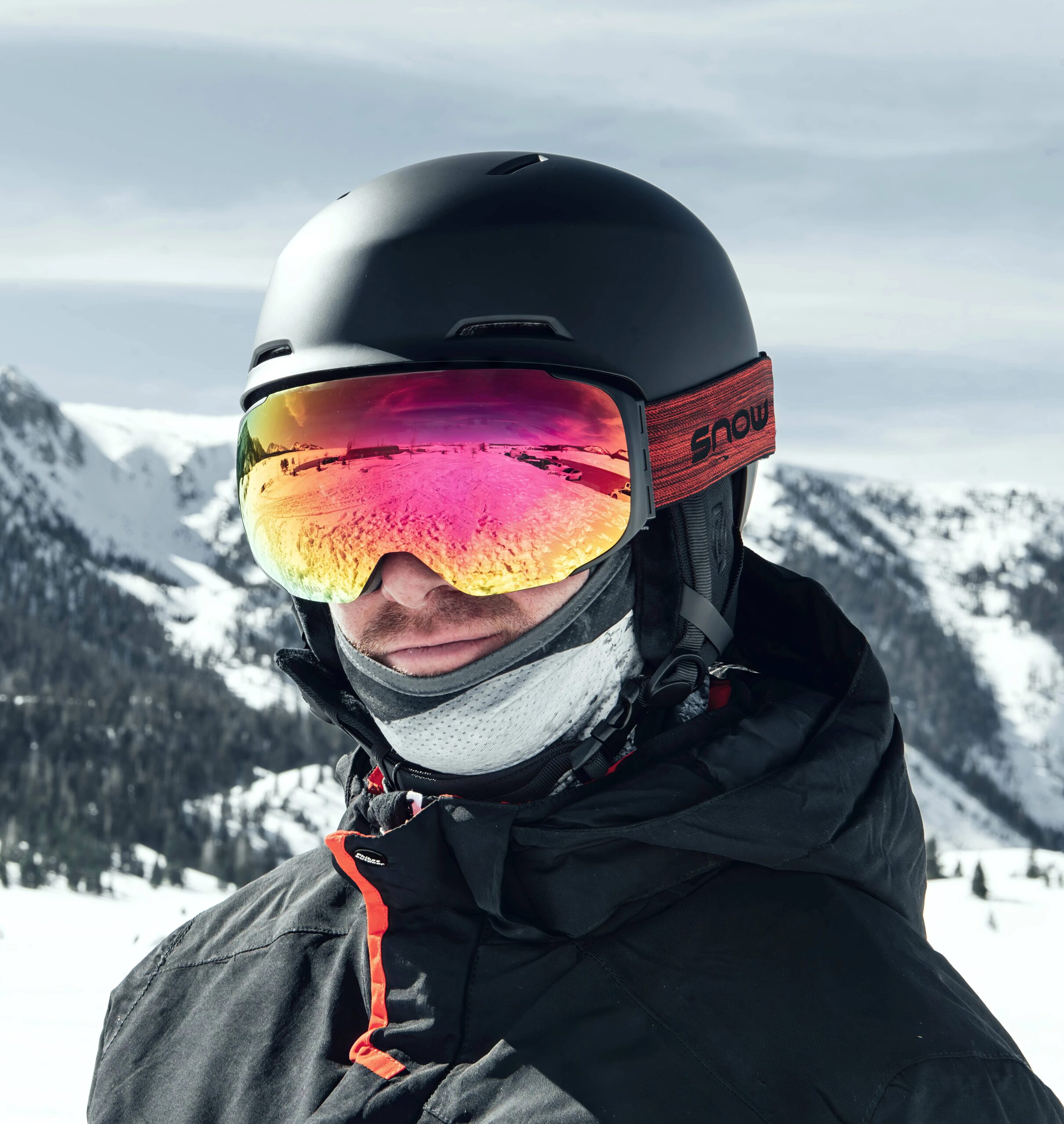
Safety Construction: Evaluate the Complete Helmet, Not an Isolated Feature
Safety remains the first requirement in ski helmet development, but protective performance cannot be reduced to the name of one component.
The shell, energy-absorbing liner, retention system, internal geometry and comfort padding all affect how a helmet performs. A module that appears advanced on its own may behave differently when combined with the rest of the construction. A change in shell geometry can affect coverage. A change inside the helmet can alter space and pressure distribution. A fit system that does not hold the helmet securely can also compromise the wearing experience.
Product development should therefore begin with the target market, use case, user group and price range before the construction and test route are selected. Models intended for different markets may need to be assessed against different standards. EN 1077 testing, for example, addresses field of vision, extent of coverage, shock absorption, penetration resistance, retention-system performance and durability. The applicable standard, class and supporting documents must be confirmed for the target market and the exact model.
A sourcing review should go beyond the specification sheet. Buyers should check whether:
- the construction matches the intended use case;
- each shell size has been evaluated appropriately;
- sample test conditions match the production configuration;
- reports, certificates and labels refer to the exact model;
- technical explanations describe both the function and its limits accurately.
A technology name may support communication, but validation of the complete helmet is what supports the product.
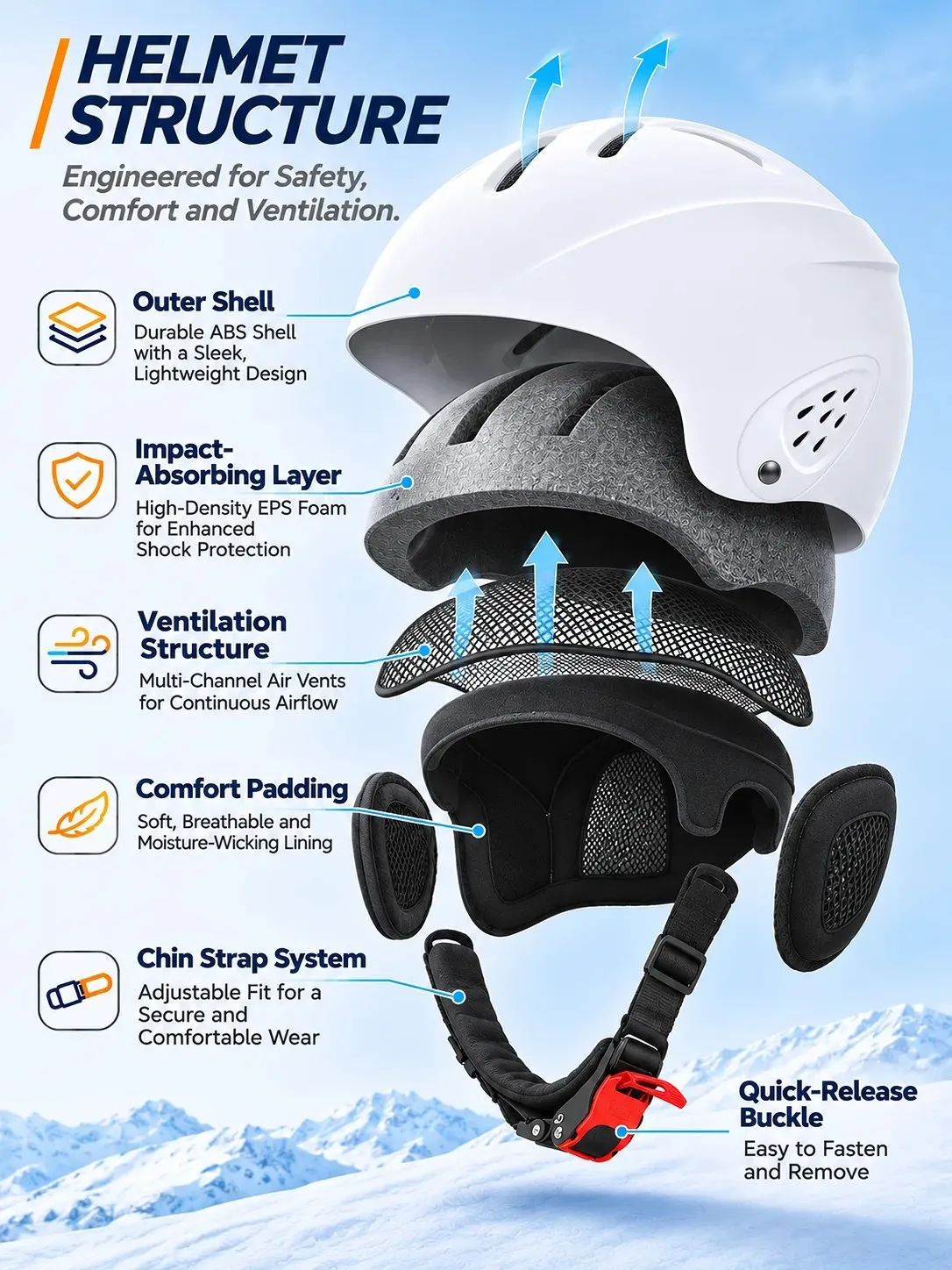
Comfort and Fit: Move Beyond Head Circumference
Head circumference is the starting point for sizing, not a complete fit assessment.
Two users with the same circumference can have different front-to-back lengths, side widths and local contours. Forehead pressure, tightness at the temples and poorly positioned ear pads are difficult to predict from a size number alone. If the fit depends on overtightening the adjustment system, the result may be uncomfortable during long use and still feel unstable.
Development teams need to assess internal shell geometry, pad thickness, adjustment range and contact points together. A fit trial should record more than whether the helmet can be worn. It should track pressure points and movement across different head shapes while the wearer is still, turning the head and simulating activity. Weight also needs to be considered together with balance and retention. Two helmets at the same measured weight can feel very different if that weight is distributed differently.
Cold-weather usability belongs in the test plan as well:
- Can the wearer find and operate the adjuster with gloves on?
- Is the vent control easy to use without accidental movement or sticking?
- Do the ear pads affect hearing, pinch the ears or press against eyewear arms?
- Can the liner be removed, cleaned and reinstalled without difficulty?
- Does the retention system hold its setting after repeated adjustment?
Comfort is not a stand-alone marketing claim. It should be described through head-shape coverage, pressure distribution and usability testing.
Equipment Integration: Develop the Helmet and Goggles as a System
Helmets and goggles are used in the same environment, yet they are often developed as separate products. Problems then appear after launch: the helmet brim presses on the top of the goggle, the frame deforms, the strap does not stay in position, nose fit changes, or the ventilation paths interfere with each other.
These issues can affect field of view, comfort and fog management. They also create avoidable customer-service questions. Moving combination testing into development is usually more effective than trying to solve compatibility problems later through user instructions.
During design reviews and sample evaluation, teams should check:
- whether the helmet brim creates pressure or an excessive gap above the goggle;
- whether the strap remains stable without riding up or slipping down;
- whether helmet sizes and goggle frame shapes form sensible combinations;
- whether pressure from the helmet distorts the nose area or face foam;
- whether the combined setup creates an additional restriction in the field of view;
- whether helmet exhaust vents and goggle vents form a clear airflow path;
- whether the goggle and strap can be adjusted while wearing gloves.
A visually clean fit does not, by itself, prove anti-fog performance. Fog management also depends on lens construction, coating, ventilation, temperature, humidity, activity level and how the equipment is worn. It requires a separate validation plan.
The value of a coordinated equipment set comes from how the products work together, not from adding two specification sheets.
Youth Fit: Do Not Treat It as a Scaled-Down Adult Design
Youth helmets need their own sizing and usability logic. Reducing the dimensions of an adult shell does not automatically address children’s head shapes, weight tolerance or use habits.
Children notice comfort, weight and appearance first. Parents are more likely to focus on stability, reliable buckles, clear adjustment and easy maintenance. A successful youth program has to address both sets of needs.
Development teams should pay particular attention to shell proportion, internal space, weight and balance, adjustment range, buckle operation and strap retention. Instructions should also help a parent check quickly whether the helmet is positioned correctly. A sizing page should offer more than a circumference range. It should explain how to measure, what to inspect during a fitting and how to recognise a poor fit.
Colour can improve visibility and give young users more choice, but appearance and protection claims must remain separate. A bright colour should not be presented as a higher safety rating unless that specific claim is supported by applicable evidence.
The value of a youth product comes from appropriate construction, clear guidance and maintainable comfort components, not simply from a smaller size label.
Sustainable Design: Turn Material Claims into an Operational Plan
Sustainability is now part of ski helmet product planning, but “made with eco-friendly materials” is too vague to be useful. Buyers and consumers need component-level information and an operational route they can verify.
A material claim should identify the component, explain how recycled content is calculated, state the evidence behind the figure and specify which models it covers. A maintenance claim should explain which comfort parts can be cleaned or replaced, how this is done and whether replacement parts will remain available. Packaging improvements should address material choice, pack volume and transport efficiency rather than relying on a general environmental message.
Recyclability claims require even greater care. Ski helmets often combine multiple materials, so practical recycling depends on the material mix, disassembly requirements and an available collection route. Amer Sports’ account of the Salomon Brigade INDEX project describes a design based largely on one material family, supported by a return route and a recycling partner. The case shows that recyclability depends on product architecture, validation and processing infrastructure—not material selection alone.
Replaceable liners and ear pads may help maintain hygiene and comfort, but they do not restore a damaged energy-absorbing structure or justify use beyond the manufacturer’s instructions. POC’s replacement guidance states that a helmet should be retired after a significant impact. Ageing, a brittle shell, damaged foam or a failed retention system are also reasons for inspection and possible replacement. Users should follow the instructions for the exact model.
A credible sustainability claim should answer three questions: What is used? How is it verified? What happens at the end of use?
Retail Support: Product Delivery Does Not End at the Factory
A ski helmet is a fit-sensitive product. Even with a sound construction, consumers may choose the wrong model if the sales channel cannot explain sizing, fitting and maintenance. Customer-service teams then have to repeat the same guidance after purchase.
Launch materials should therefore be developed alongside the product rather than added after production is complete. Retail and ecommerce teams should be able to answer:
- Who is the product designed for, and in what use case?
- How should a customer measure head circumference and choose a starting size?
- Where should the helmet sit when it is worn correctly?
- How should the wearer check tension, buckles and the retention system?
- Which goggle shapes or sizes have been evaluated with the helmet?
- How should liners, ear pads and vents be cleaned and maintained?
- What should the user do after an impact or when damage is found?
Technical diagrams, short operating videos, accurate product photography and an in-store fitting checklist can reduce misunderstanding. For distributors and ecommerce sellers, these assets are part of the commercial product because they affect conversion, returns and after-sales efficiency.
A product is not fully launch-ready simply because it can ship. The channel must also be able to explain and present it accurately.
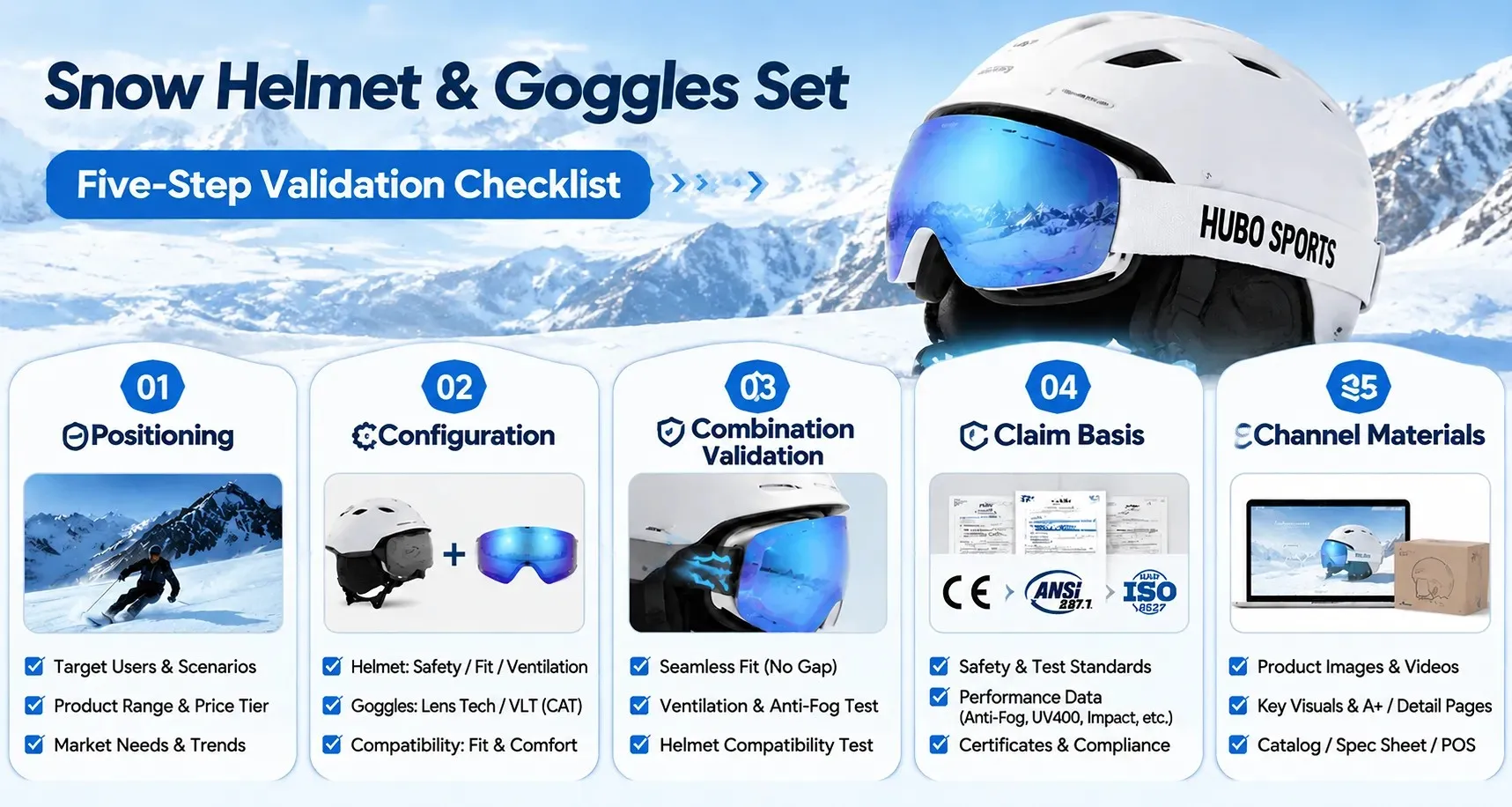
Product Planning Check: Five Questions Before Approval
| Review question | Evaluation point |
|---|---|
| 1. Is the positioning clear? | Do the target user, use case, market and price range justify the selected configuration? |
| 2. Is the configuration coordinated? | Have protection, weight, fit, ventilation and usability been assessed together? |
| 3. Has the combination been validated? | Have helmet-goggle sizing, interference, strap position, field of view and ventilation been checked? |
| 4. Are the claims supported? | Are safety, material and sustainability claims tied to the exact model and current documents? |
| 5. Is the sales channel ready? | Are sizing, fitting, maintenance and post-impact instructions ready for the sales channel? |
Conclusión
Competition in the 2026/27 ski helmet market is moving from feature count to system completeness. Individual technologies still matter, but they need to align with the full helmet construction, real head shapes, goggle combinations, target users, material documentation and retail instructions.
For brands and sourcing teams, the more reliable sequence is to define the use case before selecting the construction and compliance route; validate product combinations before writing the marketing story; and establish evidence before making safety or sustainability claims.
Every specification needs a purpose. Every important detail needs validation. Every claim needs evidence. That is how a market trend becomes product value that users can feel, channels can explain and buyers can verify.
Plan Your Next Snow-Gear Program
Planning a 2026/27 snow equipment range? Before finalising styling and specifications, build a validation checklist covering the target market, head shapes and sizes, helmet-goggle combinations, test documents and retail materials. For goggle programs, use nominated helmet samples to evaluate frame shape, strap position, field of view and ventilation compatibility.
Frequently Asked Questions
Can one safety technology represent the protective performance of the complete helmet?
No. It needs to be assessed together with the shell, energy-absorbing liner, retention system, coverage and model size. Buyers should review test and compliance documents for the exact model and configuration.
Why can two users with the same head circumference experience a different fit?
Circumference does not describe front-to-back length, side width or local contours. Internal geometry, padding and pressure distribution all affect fit.
Does a gap-free helmet and goggle fit prove compatibility?
Not necessarily. Teams should also check frame pressure, strap stability, nose fit, field of view, airflow and glove usability. A clean visual fit does not replace anti-fog testing.
Can a replaceable liner extend the protective life of a helmet?
A replaceable liner can maintain hygiene and comfort, but it cannot repair a damaged or aged protective structure. After a significant impact, visible structural damage or any condition specified by the manufacturer, follow the product instructions and retire or replace the helmet as required.
Sources
- Snow Helmets F/W 2026/27 Retail Buyer’s Guide — BoardSport Source, January 22, 2026
- CE EN 1077 A/B — Ski and Snowboard Helmets — Sweet Protection
- When to Replace a Ski Helmet — POC, October 20, 2026
- Designing for circularity: The birth of Salomon’s recyclable ski helmet — Amer Sports, September 10, 2024
Compliance note: This article is intended for product planning and sourcing evaluation. It does not state that any individual model meets a particular standard. Standards, classes, certificates, material percentages and sustainability claims must be confirmed for the target market and current model documentation.


 Spanish
 English
 Arabic
 French
 German
 Hindi
 Italian
 Japanese
 Korean
 Portuguese
 Russian