You’re halfway down a black run, carving through fresh powder, and everything goes white. Not the snow. Your goggles. You stop, wipe them, put them back on, and two minutes later you’re blind again. Every skier has had that run.
The fix isn’t one clever trick. Four things do the work: a coating, a sealed air gap, airflow, and on some models, heat. Here’s what each one actually does.
Why fog forms in the first place
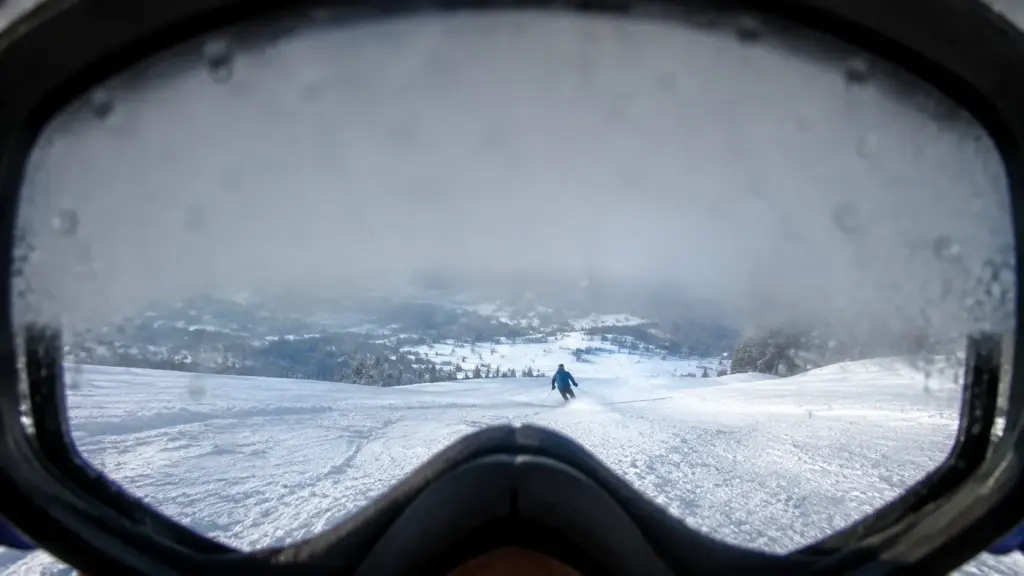
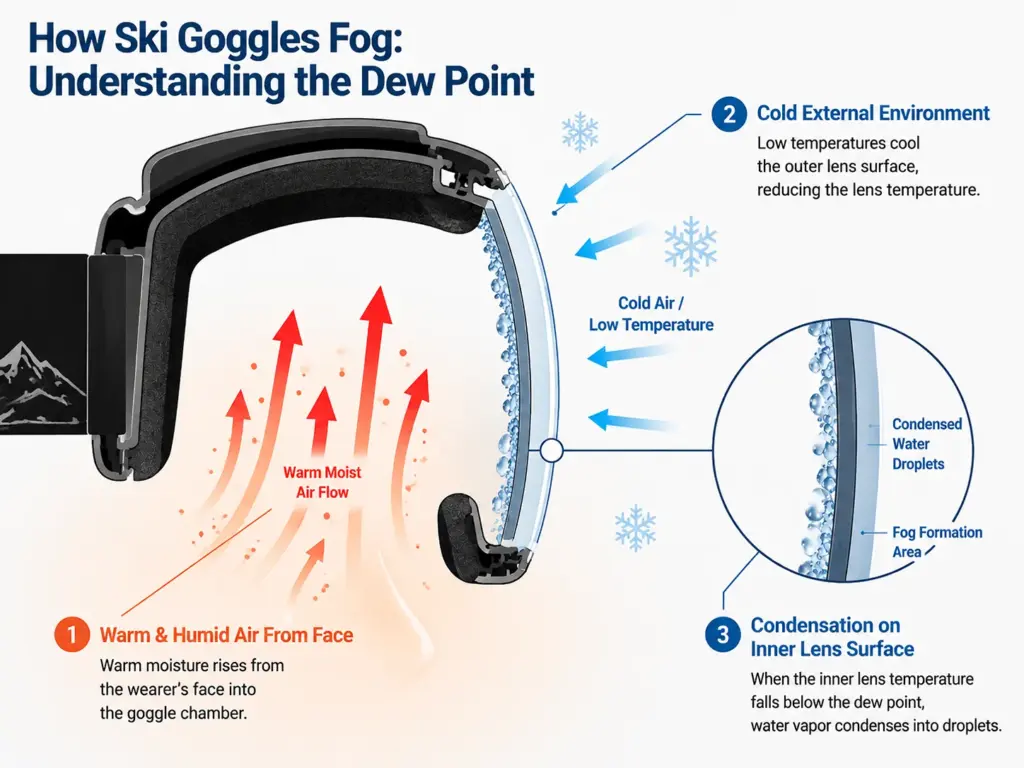
Fog isn’t a defect in your goggles. Your face gives off heat and moisture with every breath, and inside a sealed frame that warm, humid air meets a cold lens. The water vapor condenses into thousands of tiny droplets on the inner surface. That’s fog.
So anti-fog design comes down to two goals: keep the inner lens from getting cold, or keep moisture from settling on it. Everything below is one of those two.
The four systems that fight fog
Anti-fog coating
Most ski goggles start with a hydrophilic coating on the inner lens. A rain jacket repels water. This does the opposite: it attracts water molecules and pulls them flat into a thin, transparent film.
That matters because droplets bend light in every direction, which is why fog reads as white and opaque. A flat film stays clear. The coating won’t last forever, but it buys you the minutes that count most, on hard climbs and fast runs when you’re producing the most moisture.
One habit worth keeping: never touch the inner lens. Finger oils break the coating down, and a few careless wipes can cost you a season of it.
Dual-layer lenses and the air gap
A single lens is a thin barrier between your breath and the cold. A dual-layer lens gives you two, with a sealed air gap between them.
That trapped air insulates. The inner lens stays closer to your face temperature instead of tracking the outside cold, so its surface is less likely to drop below the dew point and condensation has a harder time forming.
On premium models the two lenses are injection-molded together in a single process. No glue, no foam spacer to degrade over time. The result is lighter, more durable, and the seal holds for the life of the goggle.
Ventilação
Moisture that stays inside the frame is the problem, so good goggles are built to let it out. Foam-lined vents let warm, damp air escape while keeping snow and wind from getting in.
As you move, air is drawn through the goggle and carries humidity out before it can condense. The faster you’re going, the better it works, which is convenient, because that’s usually when your face is working hardest.
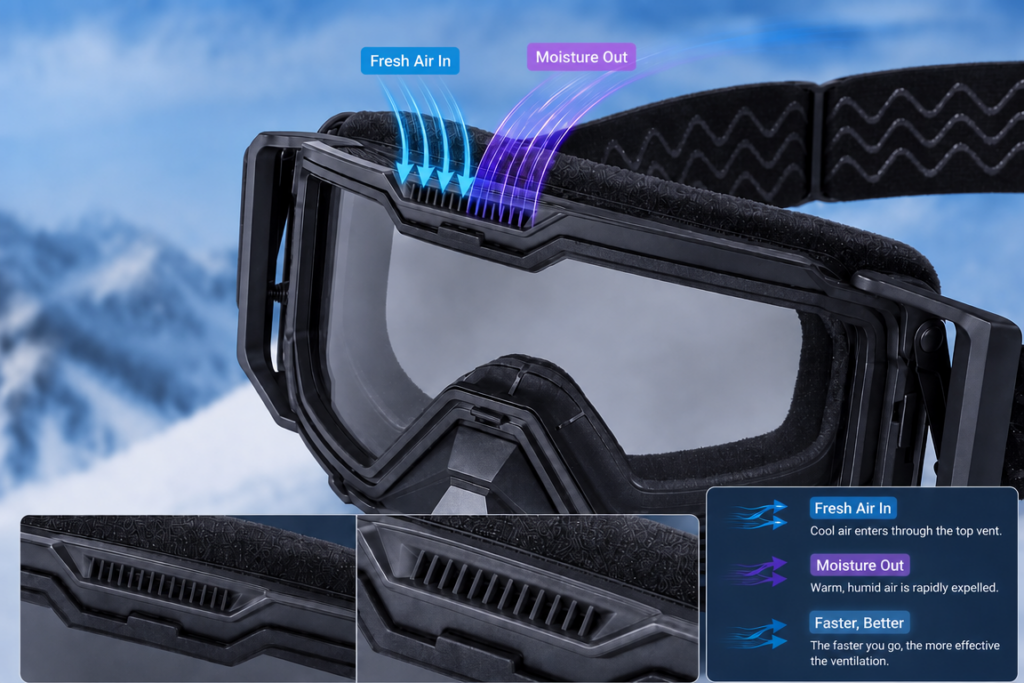
Some frames add adjustable vents. Close them on cold powder days, open them for warmer spring laps.
Heated lenses
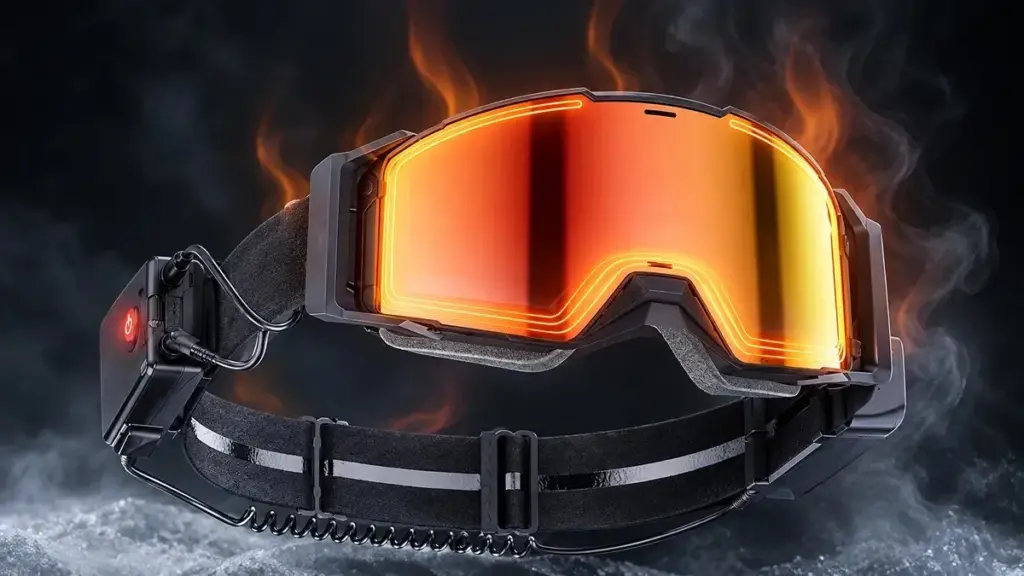
In bitter cold, heavy snowfall or high-intensity touring, coatings and insulation can still lose the fight. That’s the case for heated lenses.
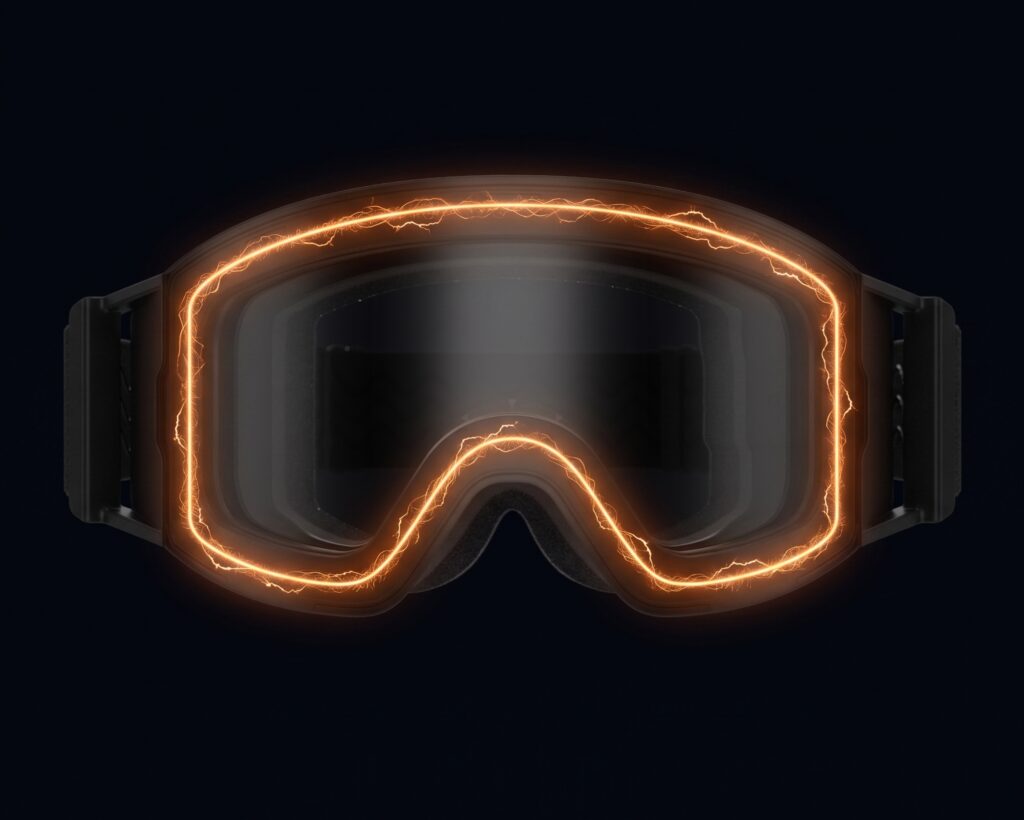
A thin, transparent conductive layer sits inside the lens, powered by a small rechargeable battery in the frame. It warms the lens surface a few degrees above ambient temperature, melting frost and stopping condensation before it forms. Same principle as the defroster in your car’s rear window, shrunk down to fit your face.
It’s the option for riders who have lost too many runs to fog, and prices have come down season by season.
Care tips that keep fog away longer
Even a good anti-fog system needs a little maintenance:
Dry them at room temperature in a dry bag after a day on the mountain. Never on a radiator or in direct heat.
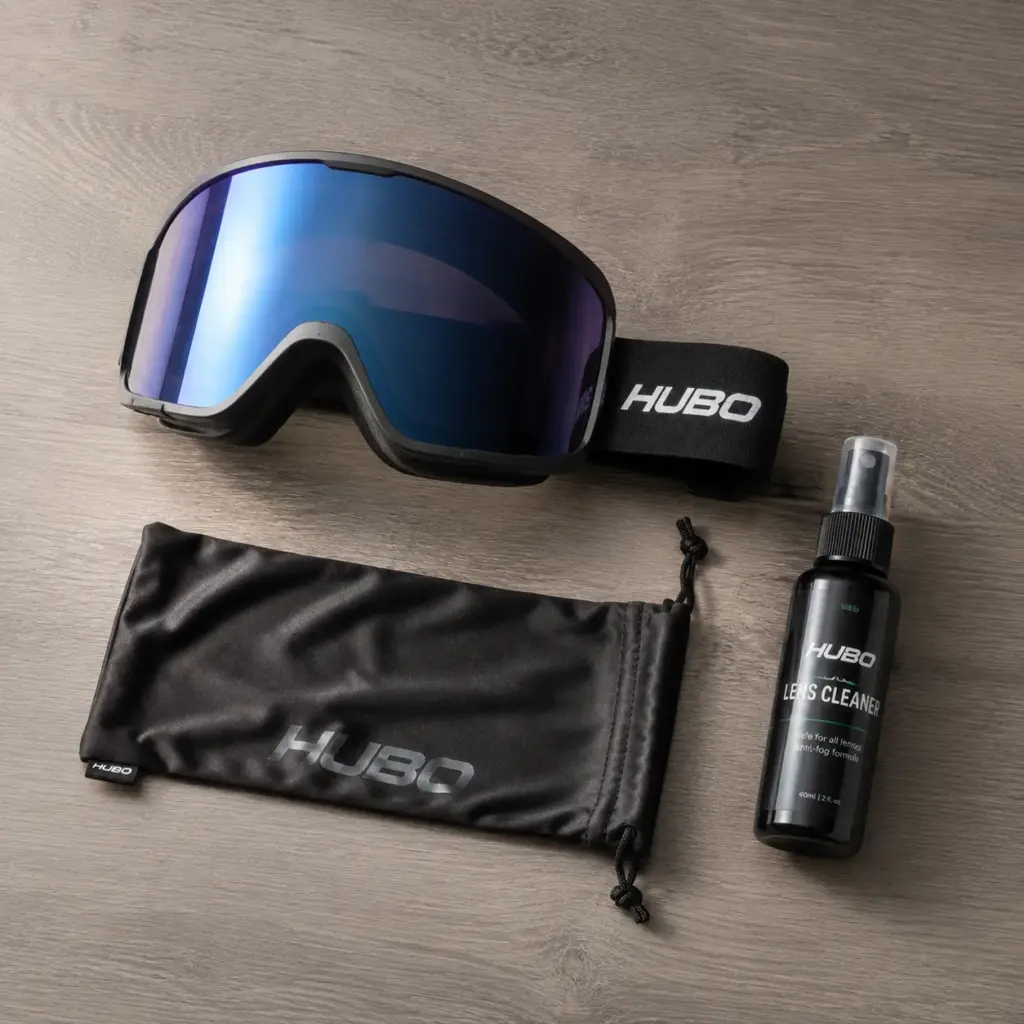
Clean them with a microfiber cloth made for optics, plus a lens cleaner rated for coated lenses if you need one.
Never wipe the inside of a coated lens with your glove, your shirt, or a paper towel.
Keep the microfiber pouch that came in the box and use it as a buffer against anything that could scratch or contaminate the lens.
Replace them when the coating gives up. Heavy use wears it out in a season or two, and once clean, undamaged lenses start fogging again, that’s the signal.
The bottom line
No single feature keeps a lens clear. The coating spreads moisture into a film, the second lens insulates, the vents flush humidity out, and heating elements handle the days when the rest isn’t enough.
So when you’re comparing goggles, read past the lens color and find out what the anti-fog system is made of. On a cold, snowy day, that’s what decides whether you can see the run in front of you.
HUBO Sports — 16 years of professional eyewear manufacturing. Your clear view is our business.